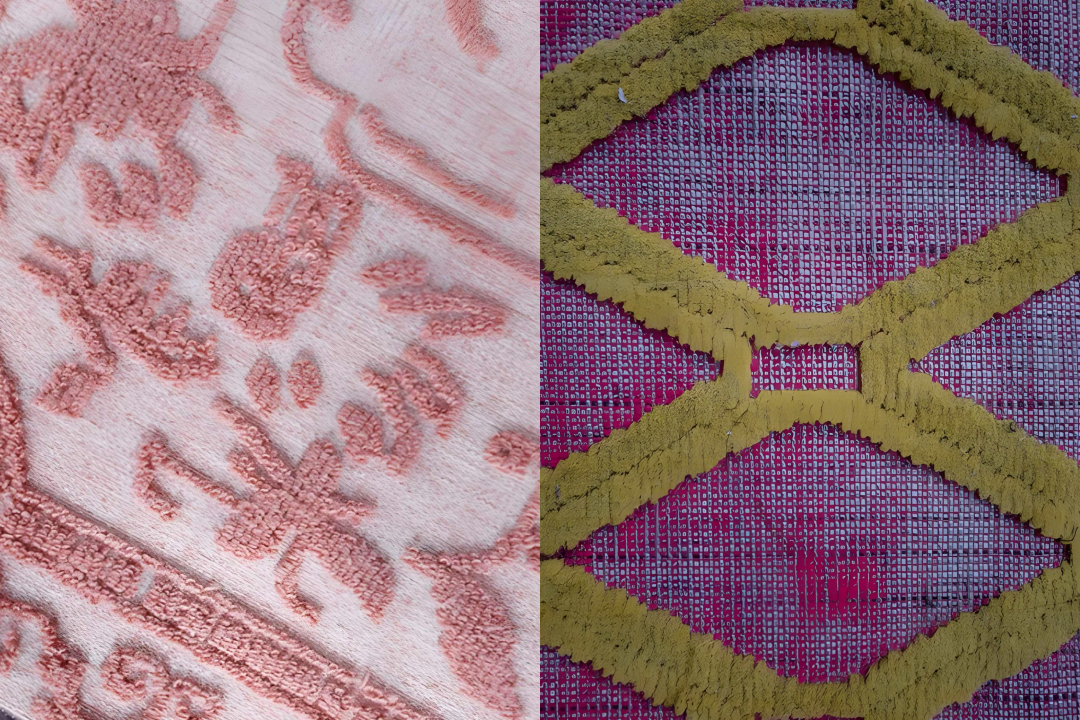
Machine tufted vs woven carpet is an important consideration in commercial flooring because carpet construction directly affects durability, maintenance, performance, and long-term cost.
For architects, facilities managers, and procurement teams, understanding these differences is essential when selecting flooring for offices, hospitality, education, and other high-traffic environments.
From wear resistance and maintenance requirements to lifecycle efficiency and operational flexibility, the right carpet choice should align with how a space is actually used—not just how it looks during installation.
What Is Machine Tufted Carpet?
Machine tufted carpet is the most widely used carpet construction method in modern commercial flooring.
It is produced by inserting yarn into a primary backing using high-speed tufting machines, creating loops or cut pile on the surface. Once the yarn is tufted, it is secured with a latex adhesive, and a secondary backing is applied to stabilize the structure and support installation.
This process allows manufacturers to produce carpet efficiently, consistently, and at scale—qualities that are essential for commercial environments where uniformity, lead time, and budget predictability matter.
The tufting process also enables a high degree of design flexibility. Yarn height, density, texture, and pattern can be precisely controlled, allowing machine tufted carpets to support everything from minimalist corporate interiors to expressive, zoned workplace designs.
This adaptability is one reason machine tufted carpet dominates offices, education facilities, healthcare buildings, and retail spaces.
Another defining advantage of machine tufted carpet is its compatibility with modular formats, particularly carpet tiles.
Modular installation allows selective replacement, phased renovations, and minimal disruption—features that are increasingly important in dynamic commercial environments where spaces evolve over time.
What Is Woven Carpet?
Woven carpet represents a more traditional approach to carpet manufacturing.
Instead of tufting yarn into a backing and securing it with adhesive, woven carpet is produced by interlacing pile yarns and backing yarns together on a loom. The result is a single, integrated structure where the pile is an inherent part of the carpet’s construction.
This method is most commonly associated with Axminster and Wilton carpets, both known for their intricate patterns, dense pile, and historical use in luxury interiors.
Because the pattern is created during the weaving process itself, woven carpet can achieve complex, multi-color designs with exceptional precision.
The structural integrity of woven carpet is one of its defining characteristics. Without reliance on latex adhesives, the pile is held firmly in place by the woven backing.
This gives woven carpet a reputation for longevity, particularly in environments where the layout remains unchanged for long periods.
However, woven carpet production is significantly slower and more resource-intensive than tufted manufacturing. Lead times are longer, customization is more complex, and costs are substantially higher. Installation also tends to be more specialized, and repairs are often difficult to execute invisibly.
As a result, woven carpet is typically reserved for spaces where design permanence, prestige, and tradition outweigh the need for flexibility or cost efficiency.
Machine Tufted vs Woven Carpet: Construction Differences
While both carpet types can be durable and visually impressive, the difference between machine tufted and woven carpet lies in how they respond to real-world commercial use.
Construction method influences everything from wear patterns and maintenance strategy to how easily a space can adapt over time.
| Aspect | Machine Tufted Carpet | Woven Carpet |
|---|---|---|
| Construction Method | Yarn tufted into backing + latex | Yarn woven into backing |
| Durability | Engineered for high-traffic performance | Structurally robust, long-lasting |
| Performance | Excellent under rolling loads and daily use | Strong structure, less flexible |
| Maintenance | Modular, easier localized repair | Specialist cleaning and repair |
| Repair Conditions | Selective replacement possible | Repairs often disruptive |
| Initial Cost | Lower | High |
| Lifecycle Cost | Optimized for commercial efficiency | High due to inflexibility |
In high-traffic environments, durability is not just about how long a carpet lasts, but how it behaves throughout its lifespan.
Machine tufted carpet is designed to recover from compression, manage wear patterns, and remain visually consistent even with constant use. Woven carpet, while structurally strong, can show wear more visibly in active areas and is less forgiving when damage occurs.
Maintenance strategy further separates the two. Machine tufted carpet, particularly in tile form, supports proactive maintenance and selective replacement. Woven carpet often requires area-wide intervention, increasing downtime and operational disruption.
Related Articles:
- What Is Axminster Carpet? A Guide for Commercial Spaces
- Carpet Tiles vs Broadloom Carpet for Offices
- How to Choose Commercial Carpet for High Traffic Areas
Best Use Cases for Machine Tufted Carpet
Machine tufted carpet is best suited for commercial environments where high traffic, operational efficiency, and long-term flexibility are part of daily operations. Its engineered construction makes it a practical solution for spaces that require consistent performance while remaining easier to maintain and adapt over time.
Common applications of machine tufted carpet include:
- Offices and corporate spaces where layouts frequently evolve and flooring needs to support ongoing reconfiguration.
- Education and healthcare facilities that require durable carpet solutions capable of handling frequent cleaning and maintenance.
- Retail and public-facing commercial areas with concentrated foot traffic and the need for efficient replacement when damage occurs.
- Modern commercial projects focused on lifecycle efficiency, long-term maintenance planning, and operational cost control.
Because of its flexibility, durability, and maintenance efficiency, machine tufted carpet continues to be one of the most widely used flooring solutions in modern commercial interiors.
Best Use Cases for Woven Carpet
Woven carpet performs best in environments where permanence, craftsmanship, and visual richness are prioritized over flexibility. Its traditional construction and intricate patterns make it a popular choice for premium interiors that aim to create a more refined and timeless atmosphere.
Common applications of woven carpet include:
- Luxury hotels and hospitality spaces that prioritize premium aesthetics and long-term visual impact.
- Heritage and cultural buildings where traditional craftsmanship and architectural character are important.
- Ceremonial and formal interiors designed to maintain a consistent layout over many years.
- High-end residential or premium commercial spaces where exclusivity and intricate design take priority over flexibility.
Because woven carpet is designed for long-term presence rather than adaptability, it is generally less suitable for environments that require frequent layout changes or rapid maintenance response.
Supporting Modern Spaces with the Right Carpet Construction
The comparison between machine tufted vs woven carpet ultimately depends on how a space is expected to perform over time.
As commercial spaces continue to evolve, flooring decisions are no longer based on appearance alone. Businesses increasingly require carpet solutions that can support high traffic, changing layouts, and ongoing maintenance without disrupting daily operations.
United Carpet supports these evolving needs through machine tufted carpet solutions designed for durability, functionality, and long-term commercial use. By focusing on both performance and adaptability, United Carpet helps businesses create spaces that remain efficient, comfortable, and visually consistent throughout their lifecycle.
For businesses looking to explore commercial carpet solutions tailored to their space and operational needs, visit United Carpet’s contact page to connect with the team.