Choosing the right carpet supplier in Malaysia for a commercial project requires more than comparing prices and browsing product catalogues. The supplier should understand how carpet performance, materials, design, traffic levels, and maintenance requirements differ across commercial environments.
Hotels, offices, retail spaces, educational facilities, and healthcare environments may require different carpet solutions. Evaluating the supplier’s experience, product range, customisation capabilities, and project support can help reduce the risk of choosing a carpet that does not suit the space.
What Should You Look for in a Carpet Supplier in Malaysia?
The right supplier should understand your space, traffic levels, design goals, and long-term performance requirements before recommending a solution.
1. Check Their Experience in Commercial Carpet Projects
Commercial carpet projects involve larger floor areas, higher traffic levels, project schedules, material specifications, and coordination with different project teams.
When evaluating a commercial carpet supplier in Malaysia, check whether they have experience in environments similar to your project, such as hospitality, corporate offices, education, healthcare, government buildings, or retail spaces.
Relevant experience can indicate whether the supplier understands the practical differences between selecting carpet for a hotel corridor, office workspace, ballroom, classroom, or retail environment.
2. Review the Carpet Types and Materials Available
A supplier’s product range should include suitable options for different commercial applications. Consider whether the available carpet types and materials can meet the expected traffic, maintenance, comfort, and design requirements.
Common options for commercial projects include:
- Carpet tiles for offices and flexible commercial layouts where modular replacement is important.
- Axminster carpet for hospitality environments requiring durability and detailed patterns.
- Hand-tufted carpet for customised spaces and feature areas.
- Wool and nylon carpet options for different combinations of comfort, appearance, and durability.
The right choice depends on the space. A hotel carpet supplier may recommend different solutions for guestrooms, corridors, ballrooms, and lobby areas within the same project.
3. Ask How They Match Carpet to Traffic and Space Requirements
A good carpet supplier should not recommend one solution for every area. Foot traffic, cleaning frequency, acoustic needs, and design requirements can vary significantly within a commercial property.
Before confirming a product, discuss how each area will be used and what performance characteristics are required.
| Project Area | What to Evaluate |
|---|---|
| Hotel lobby | Appearance retention, design, and durability |
| Hotel corridor | Traffic resistance and maintenance |
| Office workspace | Acoustics and replacement flexibility |
| Ballroom | Design flexibility and premium appearance |
| Retail space | Durability and ease of maintenance |
Selecting carpet based on actual space requirements can help reduce premature wear and unnecessary replacement.
4. Evaluate Customisation and Design Capabilities
Hotels, corporate spaces, and other design-led projects may require customised colours, patterns, dimensions, or design elements that coordinate with the overall interior concept.
When custom carpet is required, ask about available construction methods, design development, material options, order requirements, and production lead times. Early discussions provide more time for sampling, revisions, and production planning.
5. Look at Completed Projects, Not Just Product Catalogues
A product catalogue shows what a supplier offers, while a completed project portfolio shows their experience in real commercial environments.
Review whether the supplier has completed projects of a similar type or application. For hotel projects, experience with guestrooms, corridors, ballrooms, and public areas can be particularly relevant.
United Carpet has supported commercial projects across Malaysia and regional markets, including hospitality projects such as Mandarin Oriental, W Singapore – Sentosa Cove, The Westin Kuala Lumpur, G Hotel Gurney, and Sunway Putra Hotel.
6. Consider Technical Support and Project Coordination
Depending on the project scope, a carpet supplier may support specification reviews, samples, material selection, design requirements, and installation planning.
Before choosing a supplier, clarify responsibilities for site measurements, installation, scheduling, sample approval, and coordination with designers or contractors. Clear communication can help reduce delays and misunderstandings during the project.
7. Compare Long-Term Value, Not Only Carpet Price
The lowest initial quotation does not always provide the best long-term value. Carpet that is unsuitable for the actual traffic level or maintenance conditions may wear out earlier and require premature replacement.
When comparing options, consider durability, maintenance requirements, replacement flexibility, expected service life, and potential disruption from future replacement. The goal is to choose a solution that performs well in the actual space, not simply the option with the lowest initial cost.
Related Articles:
- Types of Commercial Carpets and How to Choose Them
- 5 Commercial Carpet Selection Mistakes Businesses Should Avoid
Questions to Ask Before Choosing a Carpet Supplier
Before making a final decision, ask potential suppliers:
- What types of commercial projects have you completed?
- Which carpet type suits the expected traffic level?
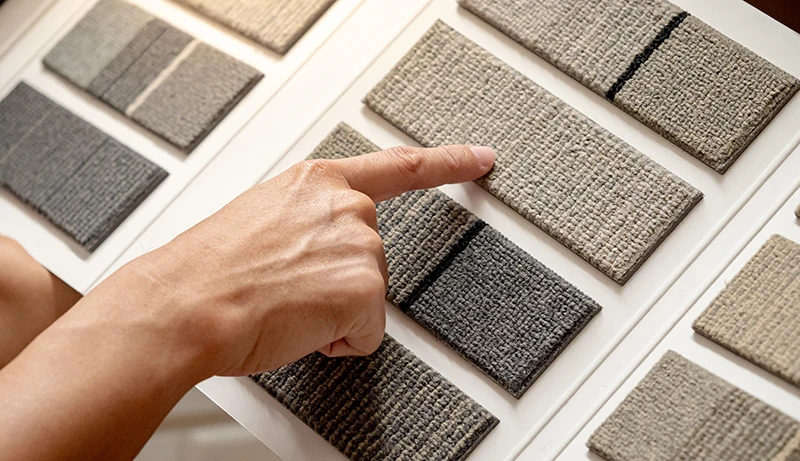
- Can you provide samples or material recommendations?
- What custom carpet options are available?
- What project support is included?
- Can you show similar completed projects?
- What maintenance requirements should be considered?
These questions can help determine whether a supplier can recommend a solution based on the project’s actual requirements.
Choosing the Right Carpet Supplier for Your Commercial Project
The right carpet supplier in Malaysia should be evaluated based on commercial experience, product suitability, material options, customisation capabilities, project support, and a proven portfolio.
United Carpet supports commercial carpet projects across Malaysia and regional markets, with experience in hospitality, corporate offices, education, healthcare, government, and retail environments.
Project teams can discuss traffic conditions, design direction, space requirements, and material considerations with United Carpet to identify a suitable carpet solution.
Frequently Asked Questions
1. Where can I find a commercial carpet supplier in Malaysia?
Look for a supplier with commercial project experience, suitable product options, technical knowledge, and a proven project portfolio. United Carpet supports commercial projects across Malaysia.
2. Does United Carpet supply carpet outside Malaysia?
Yes. United Carpet has project experience across Malaysia and regional markets, including Singapore and Indonesia.
3. Can United Carpet supply carpet for hotel renovation projects?
Yes. United Carpet supports hospitality projects and can recommend carpet options based on the space, traffic, and design requirements.
4. How early should I contact a carpet supplier before installation?
Ideally, contact the supplier during the planning or specification stage to allow time for selection, samples, customisation, and project coordination.
5. Can I request carpet samples before confirming a commercial order?
Sample availability depends on the product and project requirements. Discuss the required material, colour, pattern, and application with the supplier.