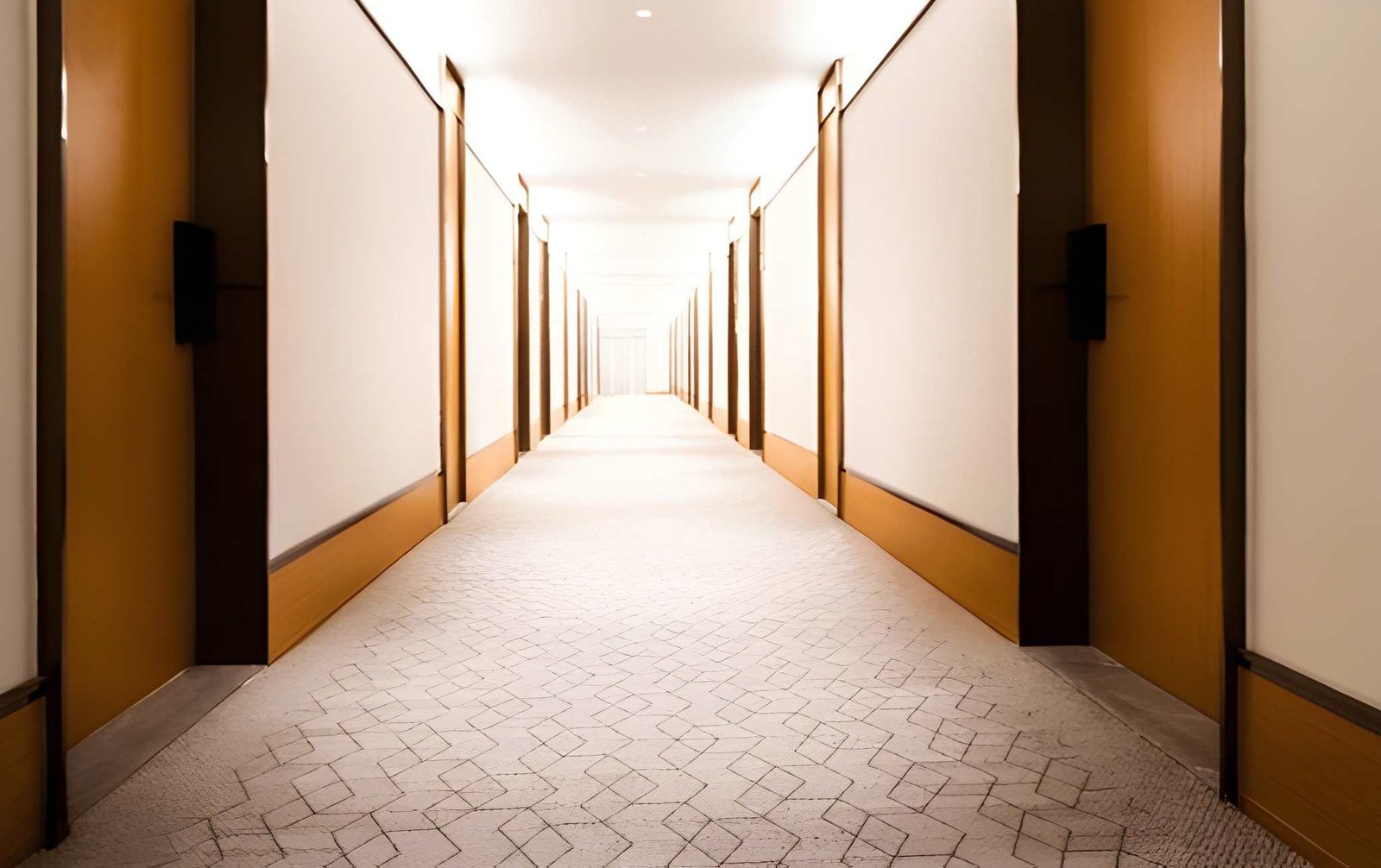
Hotel carpets can wear out quickly due to heavy foot traffic, unsuitable carpet selection, dirt accumulation, incorrect cleaning methods, untreated spills, and delayed maintenance. High-traffic areas such as hotel corridors, lobbies, and entrances often show signs of wear earlier than lower-traffic spaces.
However, premature carpet wear is not always unavoidable. Understanding what causes carpet damage and choosing the right approach to selection and maintenance can help hotels extend carpet lifespan while maintaining a comfortable and professional environment for guests.
How Long Do Hotel Carpets Usually Last?
Hotel carpets typically last around 5 to 10 years, although the actual lifespan can vary significantly depending on the carpet material and construction, daily foot traffic, the function of the area, installation quality, and maintenance practices.
Carpets in heavily used areas such as hotel lobbies and corridors may show wear earlier, while carpets in lower-traffic areas can remain in good condition for longer with proper care.
| Hotel Area | Wear Exposure | Main Challenge |
|---|---|---|
| Lobby and entrance | Very high | Outdoor dirt and continuous foot traffic |
| Corridors | High | Repetitive directional traffic |
| Guest rooms | Moderate | Luggage movement and accidental spills |
| Ballroom and function rooms | Variable to high | Events and frequent furniture movement |
| Restaurant areas | High | Food and beverage spills |
For this reason, hotels should not necessarily use the same carpet specification throughout the entire property. Each area may require a different balance of durability, comfort, design, and maintenance requirements.
7 Reasons Hotel Carpets Wear Out Quickly
Identifying the main causes of why hotel carpets wear out can help hotel operators prevent avoidable damage and plan maintenance more effectively.
1. Heavy Foot Traffic
Hotel lobbies, entrances, corridors, and lift areas receive continuous foot traffic throughout the day. Repeated pressure can gradually compress carpet fibres and create visible traffic lanes, especially when the carpet is not designed for the level of use in that particular area.
2. The Wrong Carpet Is Used for the Area
A carpet suitable for a guest room may not provide the same performance in a busy corridor, lobby, or function room. Selecting carpet mainly based on colour or pattern without considering traffic levels, construction, and maintenance needs can lead to premature wear.
3. Dirt and Debris Accumulate in the Carpet
Dirt, sand, and small particles brought in from outside can settle into carpet fibres. As people continue walking over the area, these particles may contribute to abrasive wear, making entrances and transition areas particularly important parts of a hotel carpet maintenance plan.
4. Incorrect Cleaning Methods
Cleaning helps maintain carpet appearance, but unsuitable chemicals, excessive moisture, or inappropriate equipment can affect carpet performance and appearance over time. Cleaning methods and frequency should be selected according to the carpet type, manufacturer recommendations, and traffic level of each area.
5. Spills and Moisture Are Left Untreated
Hotels regularly deal with beverage spills, food stains, wet footwear, and other sources of moisture. When these issues are not treated quickly, they can cause persistent stains, unpleasant odours, and other problems that become more difficult to manage over time.
6. Furniture and Equipment Cause Repeated Pressure
Hotel carpets are exposed to more than foot traffic. Luggage trolleys, housekeeping carts, banquet equipment, and frequent furniture movement can create repeated pressure and wear patterns in specific areas, particularly along common operational routes.
7. Maintenance Starts Too Late
Waiting until visible damage becomes severe can make carpet maintenance more difficult and costly. Regular inspections can help hotels identify stains, damaged edges, loose seams, and heavily worn areas before the problem spreads or requires larger-scale replacement.
Related Articles:
- Commercial Carpet Lifespan: Key Factors and How to Extend It
- 7 Hotel Carpet Maintenance Strategies to Extend Lifespan
How to Extend the Lifespan of Hotel Carpets
Extending carpet lifespan requires more than occasional cleaning. Hotels should consider carpet selection, preventive maintenance, daily operations, and long-term replacement planning as part of one strategy.
1, Choose the Right Carpet for Each Hotel Area
Carpet selection should be based on how each space is actually used. Traffic levels, maintenance requirements, comfort, design objectives, and operational activities should all be considered before choosing a carpet solution.
2. Build a Maintenance Schedule Around Traffic Levels
Not every hotel area requires the same cleaning frequency. High-traffic spaces such as entrances, lobbies, and corridors may need more frequent attention than guest rooms or other lower-traffic areas.
3. Control Dirt Before It Reaches Carpeted Areas
Effective entrance matting and frequent cleaning of transition areas can help reduce the amount of outdoor dirt carried onto hotel carpets. Regular vacuuming is also important for removing particles before they settle deeper into the carpet.
4. Respond Quickly to Spills, Moisture, and Early Damage
Spills should be treated promptly using methods suitable for the carpet type. Hotels should also address recurring moisture issues and inspect early signs of damage, such as loose seams or worn edges, before they affect a larger area.
5. Work With an Experienced Carpet Solution Provider
An experienced carpet solution provider can help evaluate traffic levels, area functions, design objectives, and maintenance requirements before recommending suitable solutions.
Choosing the right carpet solution like United Carpet from the beginning can help hotels balance design requirements with durability, maintenance considerations, and long-term performance.
United Carpet has experience supporting hospitality projects in Malaysia and the region including Mandarin Oriental, W Singapore – Sentosa Cove, The Westin Kuala Lumpur, and G Hotel Gurney.
Find the Right Hotel Carpet Solution With United Carpet
The right carpet solution can make a significant difference in how well hotel flooring performs under daily traffic and operational demands. With experience supporting hospitality projects in Malaysia and across the region, United Carpet can help hotels find suitable carpet solutions based on area function, traffic levels, design objectives, and maintenance requirements.
Whether you are planning a new hotel project, renovation, or carpet replacement, contact United Carpet to discuss the right carpet solution for your hospitality project.
Frequently Asked Questions
1. Can hotel carpet be replaced without closing the entire hotel?
Yes. Carpet replacement can often be completed in phases or scheduled around hotel operations, depending on the project scope and site conditions.
2. Can damaged sections of hotel carpet be replaced individually?
Yes, depending on the carpet type and damage. Modular carpet tiles allow individual sections to be replaced more easily than some other carpet systems.
3. Is custom carpet suitable for hotel projects?
Yes. Custom carpet can support specific colours, patterns, interior concepts, and other design requirements for hospitality spaces.
4. What should hotels prepare before starting a carpet replacement project?
Hotels should prepare information about the project area, timeline, traffic levels, design requirements, and operational restrictions before discussing solutions with a supplier.
5. What carpet solutions does United Carpet offer for hotels?
United Carpet offers Axminster, carpet tiles, and hand-tufted carpet solutions in different materials and designs to suit various hotel areas and project requirements.