Tag: office carpet

  • Best Office Carpet Colours for Modern Corporate Spaces

    Best Office Carpet Colours for Modern Corporate Spaces

    Office carpet colours play an important role in shaping the appearance, comfort, and functionality of modern workplaces. In today’s corporate environments, carpet is more than just flooring — it helps define the atmosphere of the office while supporting branding, employee comfort, and long-term practicality.

    The right commercial carpet colours can make an office feel more professional, welcoming, and visually organized. From neutral carpet tiles in open-plan offices to darker tones in high-traffic corporate areas, colour selection has become an important part of modern office flooring design.

    Why Carpet Colour Is Important in Office Design

    Carpet colour has a major influence on how a workplace looks and feels. Since flooring covers a large portion of the office interior, choosing suitable office carpet colours can improve aesthetics, functionality, and the overall workplace experience.

    1. First Impressions and Professional Appearance

    Office flooring contributes heavily to first impressions.

    Clients and visitors often notice the overall atmosphere of a workspace before anything else, and carpet colour helps shape that perception.

    Neutral commercial carpet colours such as grey, charcoal, and beige remain popular because they create a clean, professional, and timeless appearance suitable for modern corporate interiors.

    2. Employee Comfort and Workplace Atmosphere

    The colour of a carpet can influence how comfortable employees feel throughout the day.

    Soft and balanced tones help create a calm working environment that supports concentration and productivity. In contrast, overly bright or intense colours may become visually tiring in long-term office settings.

    Many businesses prefer modern office carpet colours that feel professional without making the space appear cold or overly formal.

    3. Space Perception and Lighting

    Carpet colour can visually affect the size and brightness of a workspace.

    Lighter office carpet colours help smaller offices feel more open and spacious, especially when combined with natural lighting. Darker tones create a more premium and structured appearance, making them suitable for larger corporate offices and executive spaces.

    This balance is important in workplace interior design where both functionality and aesthetics matter.

    4. Maintenance and Long-Term Practicality

    Practicality is one of the most important factors in commercial office flooring.

    Darker carpet tiles for office environments are often chosen because they help conceal dirt, stains, and daily wear. Patterned carpet designs are also effective for high-traffic office areas such as corridors, reception spaces, and collaborative work zones.

    Choosing practical office carpet colour ideas can help businesses maintain a cleaner and more polished appearance over time.


    Related Articles:


    5. Supporting Brand Identity

    Many companies choose carpet colours that align with their branding and office concept.

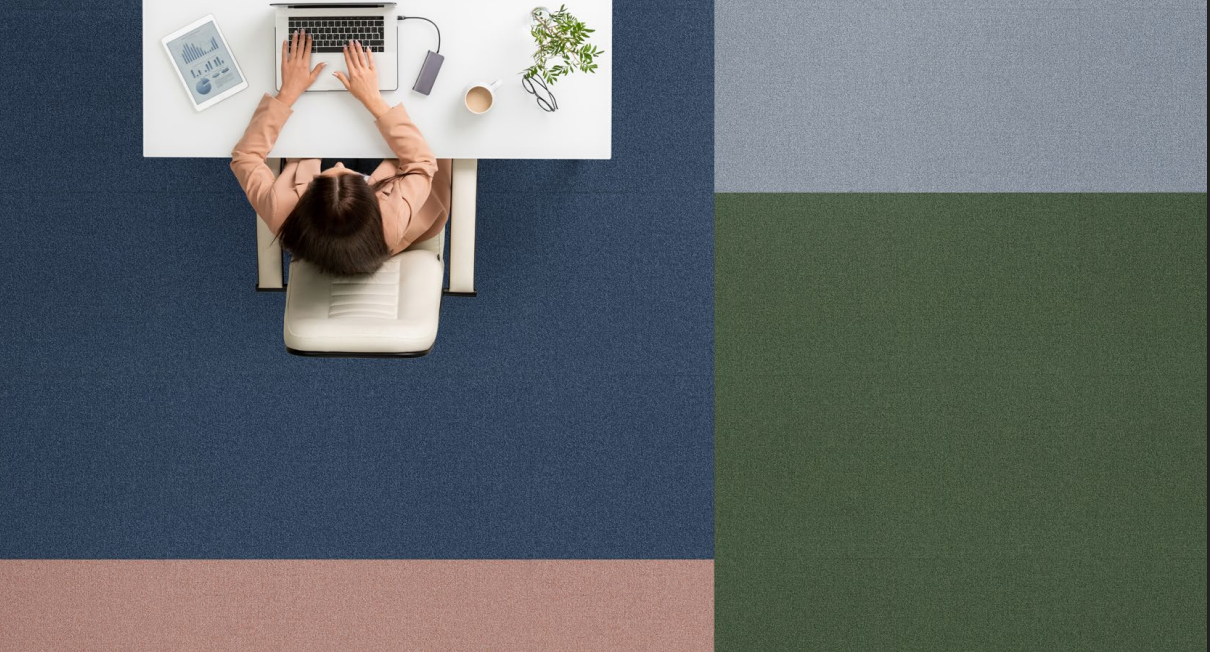
    Blue tones are commonly associated with professionalism and trust, while green and earthy tones are often used in sustainability-focused office interiors. Neutral colours remain versatile because they work well with different furniture styles, wall finishes, and workplace layouts.

    Consistent office flooring design helps create a stronger and more cohesive corporate identity.

    Carpet Colour Psychology in the Workplace

    Colour psychology plays an important role in modern office design because colours can influence mood, focus, and workplace perception. Choosing suitable office carpet colours helps businesses create environments that support productivity, professionalism, and employee wellbeing.

    Many modern corporate spaces combine neutral flooring with subtle accent colours to create a balanced and functional workplace atmosphere.

    Carpet ColourPsychological EffectCommon Office Application
    GreyProfessional, balanced, modernOpen offices, workstations, meeting rooms
    BlueCalm, focused, trustworthyCorporate offices, executive rooms
    Beige & Neutral TonesWarm, welcoming, timelessReception areas, coworking spaces
    Charcoal & BlackPremium, sophisticated, structuredHigh-traffic areas, boardrooms
    Green & Earth TonesRelaxing, natural, balancedCreative offices, breakout spaces
    Soft Brown TonesComfortable, stable, groundedLounge areas, hospitality-inspired offices

    Neutral office carpet colours continue to dominate commercial interiors because they offer flexibility and long-term visual appeal. However, accent colours are increasingly used to define collaboration zones and create more engaging workplace environments.

    Office Carpet Colour Trends in Modern Corporate Interiors (2026)

    Modern office carpet trends in 2026 focus on creating workspaces that feel professional, comfortable, and visually balanced. Businesses are increasingly selecting carpet colours that combine practicality with contemporary workplace aesthetics.

    Many of these trends are also influenced by sustainability-focused and employee-centric office design concepts.

    1. Muted Earthy Tones

    Earth-inspired colours such as olive green, taupe, clay, and warm brown are becoming more common in corporate office carpet design.

    These tones create a calmer and more natural atmosphere while supporting biophilic workplace concepts that emphasize wellbeing and connection to nature.

    2. Charcoal and Dark Grey Carpet Tiles

    Dark grey and charcoal remain among the most popular office carpet colours for modern workplaces.

    These colours provide a sleek and professional appearance while helping conceal dirt and heavy foot traffic. Charcoal carpet tiles are especially practical for large commercial offices and busy workplace environments.

    3. Textured Neutral Carpet Designs

    Neutral commercial carpet colours are evolving beyond plain finishes.

    Modern carpet tiles for office spaces now feature subtle textures and tonal variations that add visual depth without overwhelming the interior. This trend works particularly well in open-plan offices and collaborative workspaces.

    4. Accent Colours for Office Zoning

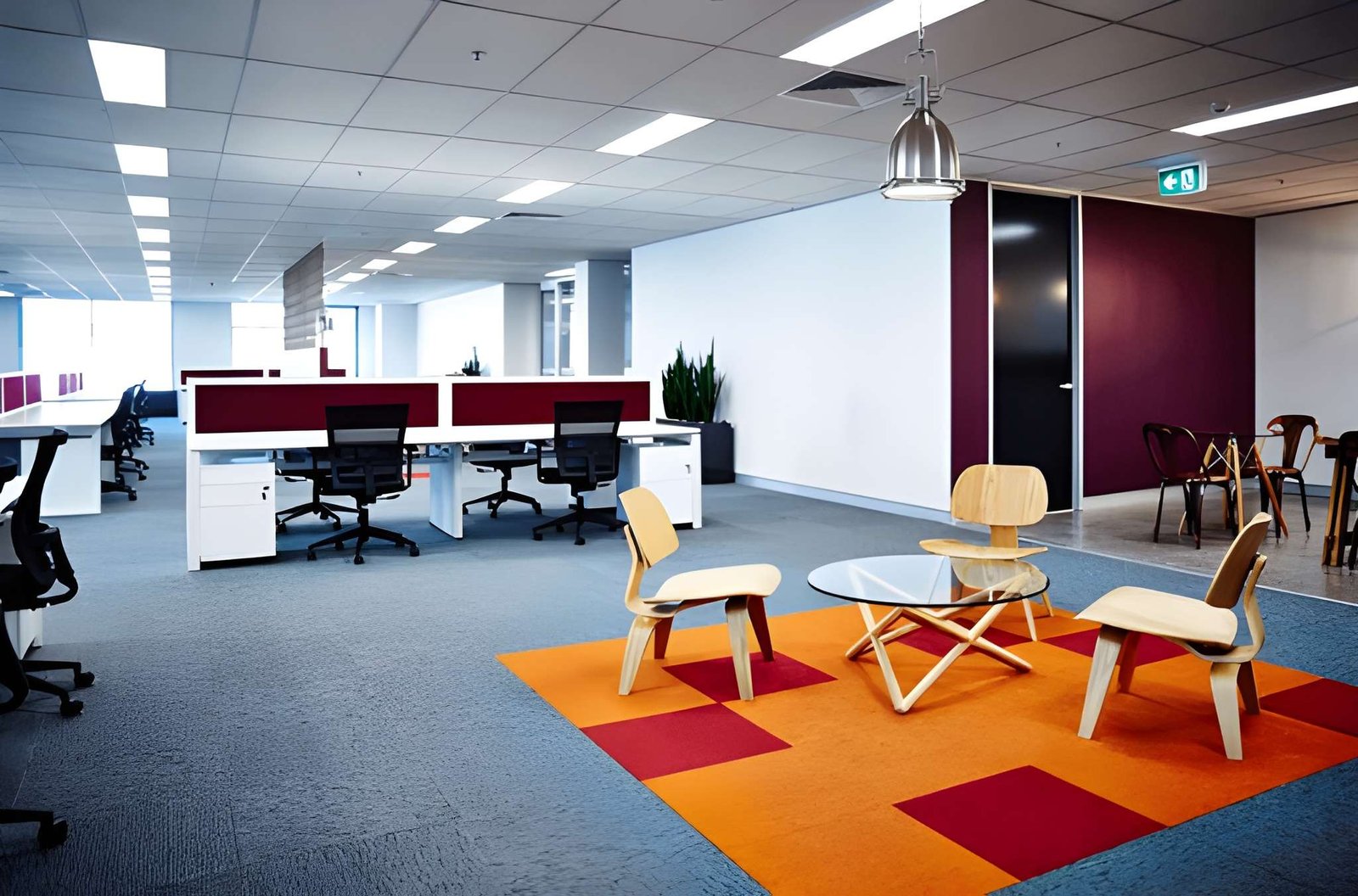
    Many modern offices use different carpet colours to visually separate functional areas.

    Muted blue, green, and terracotta tones are commonly used in breakout zones, collaborative spaces, and informal meeting areas. This approach improves workplace organization while adding more character to the office interior.

    5. Sustainable-Inspired Colour Palettes

    Natural-inspired office flooring design continues growing in popularity.

    Soft greens, stone greys, sandy beige, and organic neutral tones help create office environments that feel more welcoming and comfortable. These colours also pair well with minimalist corporate interior concepts and sustainable workplace design trends.

    Choosing the Right Office Carpet Colours for Long-Term Workplace Success

    Choosing the right office carpet colours can significantly improve the appearance, comfort, and functionality of a corporate workspace. From creating a professional first impression to supporting productivity and simplifying maintenance, carpet colour plays an important role in modern office flooring design.

    At United Carpet, we provide high-quality commercial carpet solutions for offices, corporate buildings, and modern workplaces. Whether you are looking for durable carpet tiles, contemporary office flooring, or professional office carpet installation services, our team can help you find the right solution for your project.

    Contact the United Carpet team today or explore our latest commercial carpet collections to discover suitable flooring options for your workspace.

  • Carpet Tiles vs Broadloom Carpet for Offices

    Carpet Tiles vs Broadloom Carpet for Offices

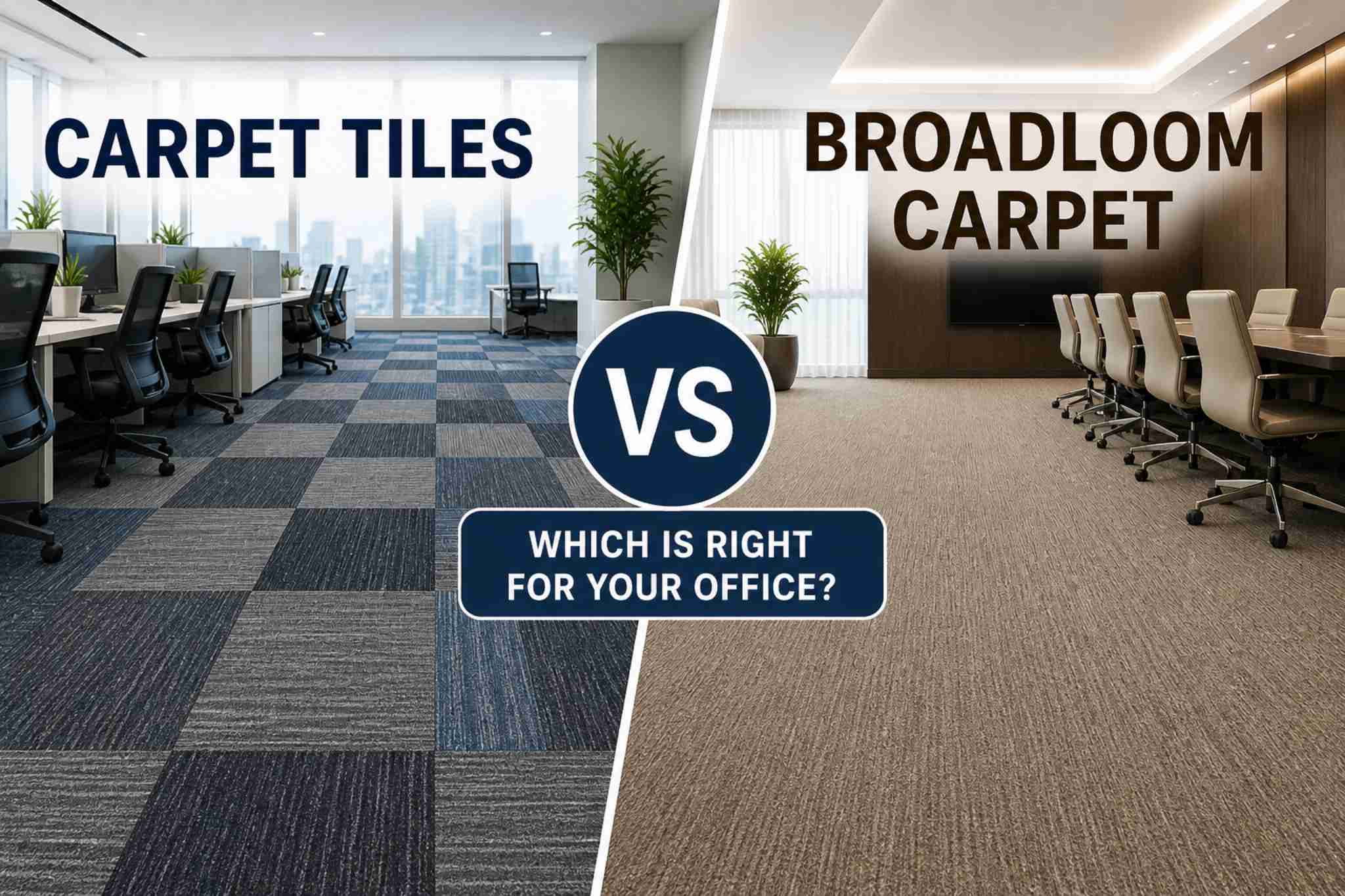
    Carpet tiles vs broadloom is one of the most common flooring decisions for offices, hotels, and commercial spaces. Both options are widely used in professional environments, but each offers different advantages in terms of maintenance, appearance, flexibility, and long-term cost.

    Choosing the right commercial carpet can affect daily operations, workplace comfort, and even brand image. In this guide, we compare carpet tiles vs broadloom, including their pros, cons, and best-use scenarios to help businesses select the right flooring solution for their needs.

    Carpet Tiles: Definition, Performance, and Commercial Applications

    Below are the key things businesses should know about carpet tiles, including their definition, performance characteristics, advantages, and common commercial applications.

    What Are Carpet Tiles?

    Carpet tiles are modular carpet pieces, typically manufactured in square or plank formats, designed to be installed individually rather than as a continuous roll.

    In commercial settings, carpet tiles are commonly produced with durable backing systems and high-performance yarns to withstand heavy foot traffic.

    Their modular nature is what sets carpet tiles apart. Instead of replacing an entire floor area when damage occurs, individual tiles can be removed and replaced with minimal disruption.

    This characteristic makes carpet tiles a practical solution for businesses prioritizing operational efficiency.

    Where Carpet Tiles Are Commonly Used

    Carpet tiles are especially popular in environments where flexibility and durability are essential:

    • Corporate offices and administrative buildings
    • Open-plan workspaces and co-working hubs
    • Call centers and customer service floors
    • Commercial corridors and circulation areas
    • Educational and training facilities

    In these spaces, flooring is subjected to rolling chairs, frequent foot traffic, and periodic layout changes. Carpet tiles are designed to adapt to these demands.

    Advantages of Carpet Tiles for Commercial Spaces

    One of the main advantages of carpet tiles in commercial environments is their practicality and long-term flexibility. Benefits include:

    • Easier maintenance and replacement compared to continuous carpet systems
    • Minimal disruption during repairs or renovations
    • Flexible design options for zoning and workspace layouts
    • Better long-term cost efficiency due to simpler replacement processes
    • Suitable for high-traffic office and commercial environments

    These advantages make carpet tiles a practical solution for businesses that prioritize durability, flexibility, and operational efficiency.

    Limitations of Carpet Tiles

    Despite their advantages, carpet tiles are not without drawbacks:

    • Visible seams may affect the perception of luxury
    • Not ideal for spaces requiring a seamless, high-end aesthetic
    • Design consistency depends heavily on installation quality

    For prestige-driven environments, these limitations may become decisive.

    Broadloom Carpet: Definition, Performance, and Commercial Applications

    Below are the essential things to know about broadloom carpet, including its definition, performance characteristics, advantages, and common commercial applications.

    What Is Broadloom Carpet?

    Broadloom carpet is supplied in large rolls, creating a continuous and seamless floor surface once installed. This format has long been associated with premium commercial interiors due to its smooth appearance and refined finish.

    Broadloom carpets are available in various constructions, including tufted and woven types, and are often specified for projects where aesthetics and comfort are top priorities.

    Where Broadloom Carpets Are Commonly Used

    Broadloom remains a preferred choice in spaces where visual continuity and comfort are critical:

    • Hotels and hospitality corridors
    • Executive offices and boardrooms
    • Conference rooms and ballrooms
    • Showrooms and formal reception areas

    In these environments, flooring contributes directly to brand perception and guest experience.

    Advantages of Broadloom Carpet

    Broadloom carpet is often preferred for commercial spaces that prioritize aesthetics, comfort, and a more premium interior appearance. Advantages include:

    • Seamless and elegant visual appearance
    • Better acoustic performance and sound absorption
    • Softer and more comfortable feel underfoot
    • Suitable for hospitality and executive environments
    • Creates a more luxurious and cohesive interior atmosphere

    These qualities make broadloom carpet a strong choice for hotels, meeting rooms, executive offices, and other client-facing commercial spaces.

    Limitations of Broadloom Carpet

    However, broadloom also presents challenges in commercial use:

    • Repairs usually require replacing larger carpet sections
    • Installation is more complex and labor-intensive
    • Less adaptable to future layout changes

    These factors can increase long-term operational costs, especially in high-traffic areas.


    Related Articles:


    Carpet Tiles vs Broadloom: Pros, Cons, and Direct Comparison

    When comparing carpet tiles vs broadloom, businesses must weigh practicality against presentation. Carpet tiles excel in efficiency and adaptability, while broadloom excels in aesthetics and comfort.

    AspectCarpet TilesBroadloom Carpet
    InstallationModular, phased installationContinuous roll installation
    MaintenanceIndividual tile replacementSection replacement required
    Design FlexibilityHigh (zoning, patterns)Limited once installed
    AestheticModern, functionalSeamless, premium
    Best ForOffices, high-traffic areasHotels, executive spaces
    Long-Term CostLower maintenance costHigher repair cost

    This comparison highlights that neither option is universally superior—each serves different commercial priorities.

    Which Is Better: Carpet Tiles or Broadloom?

    The answer to carpet tiles vs broadloom ultimately depends on how a space is used.

    Carpet tiles are better suited for businesses that:

    • Expect frequent reconfiguration
    • Operate in high-traffic environments
    • Prioritize long-term cost efficiency

    Broadloom carpets are better for organizations that:

    • Focus on premium brand presentation
    • Host clients or guests regularly
    • Require superior acoustic comfort

    In many commercial projects, the most effective solution is a hybrid approach—using carpet tiles in work areas and broadloom in executive or public-facing zones.

    Find the Right Commercial Carpet Solution with United Carpet

    There is no single winner in the carpet tiles vs broadloom comparison—the right choice depends on your space, operational needs, and design priorities. Carpet tiles offer flexibility and easy maintenance, while broadloom delivers a more seamless and premium appearance.

    Whether you need carpet tiles, broadloom carpet, or a combination of both, United Carpet provides tailored commercial flooring solutions for offices, hotels, and large-scale projects. From product selection to professional installation, our team is ready to help you create durable and visually impressive interiors.

    Ready to find the right carpet solution for your commercial space? Contact United Carpet today for expert consultation and project support.

  • Types of Commercial Carpets and How to Choose Them

    Types of Commercial Carpets and How to Choose Them

    Types of commercial carpets play an important role in how business spaces look, function, and perform daily. In offices, hotels, retail stores, and public buildings, flooring must withstand constant foot traffic while maintaining durability, safety, and a professional appearance.

    Unlike residential options, commercial carpets are built to meet higher standards in wear resistance, maintenance, and compliance. Choosing the right carpet is not just about design—it directly impacts operational efficiency, costs, and overall user experience.

    Understanding the different types and how to choose the right one helps businesses invest in flooring that delivers long-term value.

    What Are Commercial Carpets?

    Commercial carpets are flooring solutions specifically engineered for use in business and public environments where durability, performance, and safety are essential. They are designed to withstand high foot traffic, frequent cleaning, and extended use without quickly showing wear or deterioration.

    Compared to residential carpets, commercial carpets typically feature stronger fiber construction, denser pile structures, and more robust backing systems.

    These characteristics help maintain appearance over time while reducing issues such as flattening, fraying, or staining. Many commercial carpets are also engineered to provide acoustic benefits, helping reduce noise levels in busy workplaces and public spaces.

    In addition, commercial carpets often comply with industry standards related to fire resistance, slip resistance, and indoor air quality.

    Because they are commonly used in large-scale projects, commercial carpets are usually specified, supplied, and installed through professional flooring solution providers rather than purchased directly from retail shops.


    Related Articles:


    Types of Commercial Carpets

    Commercial carpets can be classified in several ways to help buyers understand their structure, material composition, and intended use. These classifications make it easier to select a carpet that aligns with functional needs, budget considerations, and design goals.

    Types of Commercial Carpets Based on Construction / Format

    This classification refers to how the carpet is manufactured and installed.

    1. Carpet Tiles

    Carpet tiles are modular carpet pieces, usually square or rectangular, designed for flexible installation. They are easy to replace, making them ideal for high-traffic areas where damage may occur in specific zones. Carpet tiles are widely used in offices, co-working spaces, and commercial corridors due to their practicality and cost efficiency.

    2. Broadloom Carpets

    Broadloom carpets are supplied in large rolls, creating a seamless and continuous floor appearance. This format offers a more luxurious and uniform look, often preferred in hotels, conference rooms, executive offices, and hospitality environments where aesthetics play a key role.

    3. Needle-Punched Carpets

    Needle-punched carpets are manufactured by mechanically bonding fibers together, resulting in a dense, flat, and highly durable surface. These carpets are commonly used in industrial areas, exhibitions, back-of-house spaces, and environments where functionality takes priority over decorative design.

    4. Woven Commercial Carpets

    Woven commercial carpets are produced using traditional weaving techniques where yarns are interlaced directly into the backing, creating a highly durable and structurally stable carpet.

    Due to their premium appearance and long lifespan, woven carpets are often selected for luxury hotels, boardrooms, ballrooms, theaters, and high-end commercial interiors where both aesthetics and durability are essential. Axminster carpets are a well-known example of woven commercial carpets commonly used in hospitality projects.

    5. Entrance & Barrier Matting Systems

    Entrance and barrier matting systems are specialized commercial carpets designed to be installed at building entry points. Their primary purpose is to trap dirt, dust, and moisture before it enters interior spaces, helping maintain cleanliness and protect internal flooring.

    Ideal placement areas include main entrances, secondary access points, lift lobbies, and transitional zones between outdoor and indoor spaces.

    Types of Commercial Carpets Based on Material

    This classification focuses on the fiber used to produce the carpet, which directly affects durability, maintenance, and comfort.

    1. Nylon Carpets

    Nylon is one of the most popular materials for commercial carpets due to its strength, resilience, and ability to recover from heavy foot traffic. It is ideal for offices, airports, and high-traffic commercial spaces.

    2. Polypropylene (Olefin) Carpets

    Polypropylene carpets are known for their resistance to moisture and staining, making them suitable for budget-conscious projects or areas exposed to spills. They are commonly used in retail spaces and utility areas.

    3. Wool or Wool-Blend Carpets

    Wool carpets offer a premium look and natural comfort. When blended with synthetic fibers, they provide improved durability while maintaining a high-end aesthetic. These carpets are often chosen for luxury hospitality and executive environments.

    Types of Commercial Carpets Based on Industry Application

    This classification is based on where the carpet is used.

    1. Office & Corporate Spaces

    Office carpets prioritize durability, acoustic control, and ease of maintenance. Carpet tiles are often preferred due to their flexibility and modular nature.

    2. Hospitality (Hotels & Restaurants)

    Hospitality carpets focus on comfort, design, and brand identity. Broadloom carpets are commonly used to create a seamless and luxurious atmosphere.

    3. Retail Spaces

    Retail carpets must balance visual appeal with wear resistance. The right carpet helps enhance customer experience while withstanding constant foot traffic.

    4. Healthcare & Education

    Carpets in healthcare and educational facilities emphasize hygiene, safety, and compliance with strict regulations, often using materials and constructions designed for easy cleaning and durability.

    How to Get Commercial Carpets?

    Commercial carpets are generally not purchased from standard retail carpet shops. Instead, they are sourced through professional flooring solution providers who handle commercial projects.

    In many cases, commercial carpets are:

    • Specified and selected based on project requirements
    • Customized in terms of size, backing, color, and performance
    • Supplied with professional installation services

    This project-based approach ensures the carpet meets functional needs, safety standards, and long-term performance expectations.

    Tips to Choose the Best Commercial Carpets

    Choosing the best commercial carpet requires more than just selecting a design that looks good. Businesses need to consider factors such as durability, functionality, maintenance, and how the carpet performs in specific environment.

    1. Evaluate Foot Traffic Levels

    Understanding how much traffic an area receives helps determine the right carpet construction and material to avoid premature wear.

    2. Match Carpet Type to Space Function

    Different areas require different solutions—what works for an office corridor may not suit a hotel lobby or retail showroom.

    3. Consider Maintenance and Lifecycle Costs

    Choosing a carpet that is easy to maintain and repair can significantly reduce long-term operational expenses.

    4. Ensure Safety and Compliance

    Always check fire ratings, slip resistance, and indoor air quality standards, especially for public and regulated environments.

    5. Choose an Experienced Commercial Carpet Provider

    Working with a supplier that has a long history in designing and delivering commercial carpet solutions—such as United Carpet—helps ensure the carpet is not only visually appealing but also technically suitable for the project. Experience matters when translating design concepts into durable, real-world flooring solutions.

    Partnering with United Carpet for Better Flooring Solutions

    Selecting the right commercial carpet involves more than choosing a color or pattern. It requires a clear understanding of construction formats, materials, industry applications, and long-term performance considerations. When these factors are aligned, commercial carpets can enhance both the functionality and identity of a business space.

    Partnering with an experienced solution provider like United Carpet Solutions allows businesses to move beyond standard products and toward tailored flooring solutions.

    With a comprehensive range of commercial carpet options and a strong focus on design, quality, and professional execution, United Carpet supports projects from concept to completion—helping businesses invest in flooring that performs reliably for years to come.

    Ready to find the right commercial carpet for your project? Contact United Carpet to discuss your requirements and get expert guidance on the best flooring solution for your space.