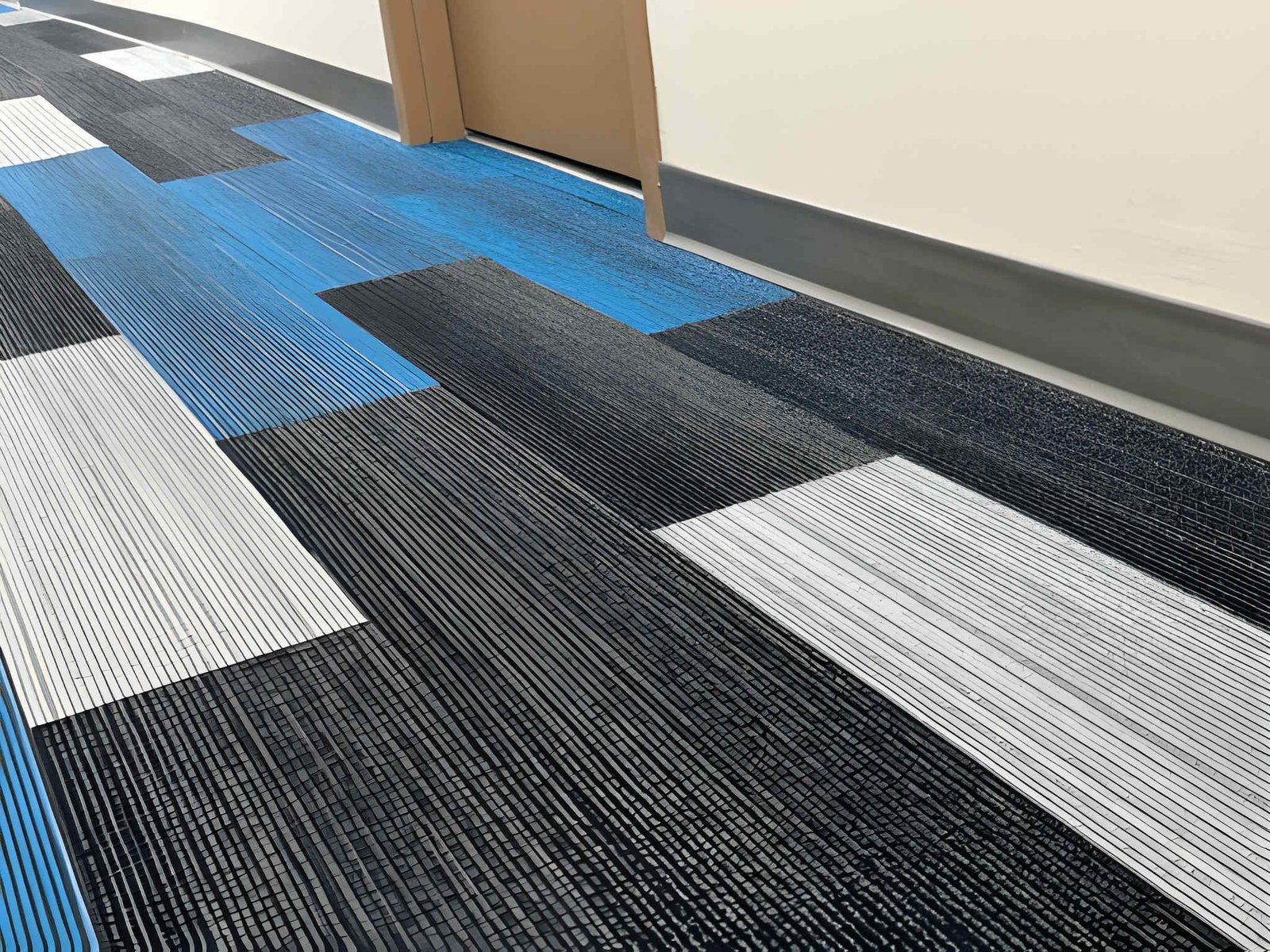
Carpet tiles for offices have become a preferred flooring solution for modern workplaces that demand durability, flexibility, and long-term efficiency.
Beyond aesthetics, office flooring today must support acoustic comfort, daily traffic, and easier maintenance in fast-moving work environments.
As offices evolve into open-plan and collaborative spaces, businesses increasingly need flooring that can adapt to layout changes and continuous use.
Unlike traditional carpet rolls, carpet tiles offer modular flexibility, allowing easier replacement, reduced downtime, and better lifecycle value for commercial spaces.
What Are Carpet Tiles?
Carpet tiles are modular carpet units—most commonly square, but also available in rectangular plank formats—engineered specifically for commercial applications.
Unlike traditional broadloom carpets that are installed in large rolls, carpet tiles are laid piece by piece, creating a flexible flooring system that can be installed, replaced, or reconfigured with minimal disruption.
From a technical standpoint, carpet tiles for offices are designed with reinforced backing systems that provide dimensional stability, resistance to movement, and compatibility with raised access floors commonly found in modern office buildings.
This makes them especially practical in offices where underfloor cabling, data systems, and HVAC access are required.
Best Areas in Offices to Use Carpet Tiles
- Open-plan workspaces – Designed to handle continuous foot traffic, office chair movement, and frequent reconfiguration
- Meeting and conference rooms – Improve acoustic control and speech clarity
- Private offices and executive rooms – Offer comfort with a refined, professional appearance
- Corridors and internal walkways – Allow targeted replacement in wear-prone zones
- Co-working and collaboration areas – Enable zoning through color and pattern variation
Pros and Cons of Carpet Tiles for Offices
Carpet tiles are widely adopted in commercial projects due to their operational advantages, but informed B2B buyers should understand both benefits and limitations to make accurate specification decisions.
Advantages of Carpet Tiles for Offices
One of the biggest advantages of carpet tiles is their modular design. Damaged or stained tiles can be replaced individually, reducing downtime and avoiding full-floor replacement.
From a long-term perspective, carpet tiles for offices also help reduce maintenance costs and material waste while offering good durability for daily commercial use.
They also improve acoustic comfort by absorbing ambient noise, making open-plan offices feel quieter and more productive.
In addition, carpet tiles offer strong design flexibility, allowing businesses to create zoning, pathways, or branded layouts more easily.
Potential Limitations
Despite their advantages, carpet tiles require proper specification and professional installation.
Lower-quality tiles may show visible seams over time, and replacing tiles from different production batches may cause slight color variations.
These risks can be mitigated by working with reputable manufacturers and experienced installers.
Comparison: Carpet Tiles vs Other Office Flooring Options
| Aspect | Carpet Tiles for Offices | Broadloom Carpet | Hard Flooring (Vinyl / Tile) |
|---|---|---|---|
| Installation | Modular, minimal disruption | Complex, large-roll handling | Area-based |
| Maintenance | Individual tile replacement | Full-area repair | Easy cleaning, costly repairs |
| Acoustic Comfort | Excellent | Very good | Limited |
| Design Flexibility | High | Limited | Moderate |
| Long-Term Cost | Highly cost-efficient | Higher lifecycle cost | Usage-dependent |
Types of Carpet Tiles Commonly Used in Offices
Different office environments require different carpet tile constructions to support durability, comfort, maintenance, and design needs.
Understanding the common types of carpet tiles for offices helps businesses choose the most suitable option for each workspace area.
- Loop Pile Carpet Tiles
Known for durability and resistance to crushing, loop pile tiles are ideal for open-plan offices, corridors, and operational areas with high foot traffic. - Cut Pile Carpet Tiles
Offering a softer texture and more refined appearance, cut pile tiles are commonly used in executive offices, meeting rooms, and client-facing spaces. - Solution-Dyed Carpet Tiles
With color embedded directly into the fiber, solution-dyed tiles provide superior resistance to stains, fading, and cleaning chemicals, making them ideal for long-term office installations.
Related Articles:
- Carpet Tiles vs Broadloom Carpet for Offices
- Carpet Tiles Benefits: Why They’re Popular in Corporate Offices
- Carpet Tiles and Sustainability: What Businesses Should Know
How to Choose the Right Carpet Tiles for Your Office
Choosing the right carpet tiles for offices involves more than selecting colors or patterns.
Businesses should consider factors such as traffic levels, acoustic performance, maintenance needs, and long-term durability to ensure the flooring supports both operational efficiency and workplace comfort.
1. Traffic Level and Usage Intensity
Different office zones experience varying levels of foot traffic and equipment movement. High-traffic areas such as open workspaces and corridors require carpet tiles with durable pile construction and reinforced backing to prevent premature wear and deformation.
2. Acoustic Performance Requirements
Open-plan offices and collaborative areas benefit from carpet tiles designed to absorb sound and reduce noise transmission. Selecting tiles with strong acoustic properties helps improve speech clarity, reduce distractions, and support employee productivity.
3. Design, Layout, and Brand Alignment
Carpet tiles offer extensive design flexibility. Color combinations, textures, and directional layouts can be used to define work zones, guide movement, or reinforce corporate branding without the need for permanent partitions.
4. Maintenance Strategy and Lifecycle Planning
Modular carpet tiles simplify long-term maintenance by allowing selective replacement instead of full-floor refurbishment. This reduces maintenance costs, minimizes disruption, and extends the usable lifespan of office flooring.
5. Partnering with Reliable Carpet Manufacturers
The performance of carpet tiles for offices depends heavily on manufacturing quality and technical expertise.
Entrusting office flooring projects to experienced carpet makers such as United Carpet ensures consistent product quality, reliable supply, and professional support from specification through installation and after-sales service.
Build Smarter Workspaces with the Right Carpet Tiles
Carpet tiles for offices continue to be a practical choice for modern commercial spaces thanks to their durability, flexibility, acoustic comfort, and easy maintenance.
Beyond design, the right carpet tiles can help businesses create workspaces that feel more professional, comfortable, and efficient for daily operations.
With extensive experience in commercial flooring, United Carpet offers carpet tile solutions designed for a wide range of office environments, from open workspaces to meeting rooms and corporate offices.
Explore United Carpet’s carpet tile collections or connect with the team to find the right solution for your workspace needs.