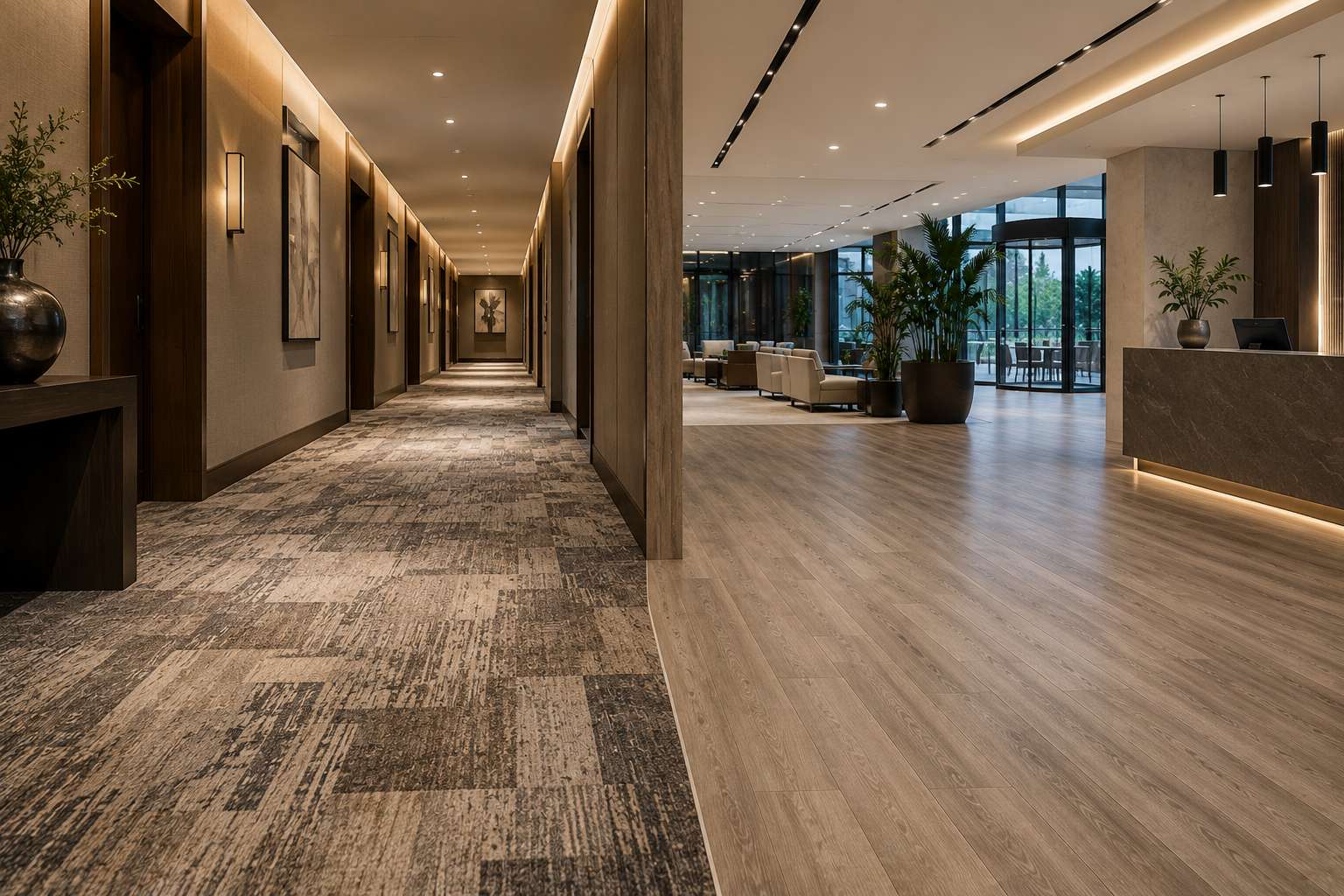
Carpet vs vinyl flooring is a common comparison when selecting flooring for offices, hotels, retail stores, and other commercial spaces. Both options offer different advantages in terms of comfort, maintenance, durability, and design flexibility.
The right choice depends on how the space is used, the expected foot traffic, maintenance requirements, and the experience you want to create for employees, customers, or guests.
Quick Comparison: Carpet vs Vinyl Flooring
If you’re looking for a quick answer, here’s a side-by-side comparison.
| Factor | Carpet | Vinyl Flooring |
|---|---|---|
| Comfort | Excellent | Good |
| Noise Reduction | Excellent | Limited |
| Maintenance | Moderate | Easy |
| Water Resistance | Limited | Excellent |
| Design Flexibility | Excellent | Good |
| Slip Resistance | Good | Varies |
| Hospitality Feel | Excellent | Moderate |
| High-Traffic Performance | Good | Excellent |
Many businesses choose carpet for offices and hospitality environments because it improves comfort and acoustic performance. They often choose vinyl flooring for areas that require frequent cleaning, moisture resistance, and easier maintenance.
What Is Commercial Carpet?
Commercial carpet is designed for business environments that experience regular foot traffic. Unlike residential carpet, commercial carpet focuses on durability, safety, and long-term performance.
Common commercial carpet options include:
- Carpet Tiles
- Axminster Carpet
- Hand Tufted Carpet
- Broadloom Carpet
These products are frequently used in offices, hotels, meeting rooms, corridors, and executive spaces.
What Is Vinyl Flooring?
Vinyl flooring is a resilient hard-surface flooring solution manufactured from synthetic materials designed to withstand daily wear and tear.
Popular types include:
- Vinyl Tiles
- Luxury Vinyl Tiles (LVT)
- Vinyl Plank Flooring
- SPC Flooring
Vinyl flooring is commonly installed in retail stores, healthcare facilities, educational buildings, and areas exposed to moisture.
Carpet vs Vinyl Flooring Pros and Cons
Both flooring options have strengths and limitations:
| Factor | Carpet | Vinyl Flooring |
|---|---|---|
| Comfort | Softer underfoot and more comfortable for prolonged use | Firmer walking surface |
| Noise Reduction | Excellent sound absorption | Limited acoustic performance |
| Maintenance | Requires regular vacuuming and cleaning | Easy to clean and maintain |
| Water Resistance | Not ideal for wet areas | Highly water resistant |
| Design Options | Wide range of patterns and customisation | Available in various finishes and textures |
| Hospitality Appeal | Creates a warmer and more luxurious feel | More practical and functional |
| Durability | Suitable for commercial traffic when properly maintained | Performs well in demanding environments |
Related Articles:
- Carpet Tiles vs Broadloom Carpet for Offices
- Machine Tufted vs Woven Carpet: Which Fits Commercial Spaces?
How to Choose Between Carpet and Vinyl Flooring
The best flooring solution depends on the function of the space. While carpet is often selected for comfort and acoustic performance, vinyl flooring is commonly chosen for durability, moisture resistance, and easier maintenance.
| Commercial Space | Recommended Flooring | Reason |
|---|---|---|
| Offices | Carpet | Better acoustic comfort and workplace experience |
| Hotels | Carpet | Creates a quieter and more luxurious environment |
| Meeting Rooms | Carpet | Helps reduce noise and improve speech clarity |
| Executive Areas | Carpet | Offers a more premium appearance |
| Retail Stores | Vinyl Flooring | Handles heavy foot traffic well |
| Healthcare Facilities | Vinyl Flooring | Easier to clean and maintain |
| Cafés and Restaurants | Vinyl Flooring | Better moisture resistance |
| Pantry and Wet Areas | Vinyl Flooring | Suitable for frequent cleaning and spills |
Can Carpet and Vinyl Flooring Be Used Together?
Yes.
Many modern commercial interiors combine both flooring types to maximize performance.
Examples include:
| Area | Recommended Flooring |
|---|---|
| Reception Area | Vinyl Flooring |
| Office Workspace | Carpet Tiles |
| Hotel Corridor | Carpet |
| Pantry Area | Vinyl Flooring |
| Meeting Room | Carpet |
| Washroom Area | Vinyl Flooring |
This approach allows businesses to balance comfort, durability, maintenance, and aesthetics throughout the building.
Commercial Carpet and Vinyl Flooring Solutions from United Carpet
Choosing between carpet and vinyl flooring depends on the functional requirements of each space. While carpet often excels in comfort, acoustics, and hospitality environments, vinyl flooring offers excellent durability and ease of maintenance.
At United Carpet , we provide both commercial carpet and vinyl flooring solutions tailored to offices, hotels, retail developments, healthcare facilities, and other commercial projects.
Explore our collection to find the flooring solution that best matches your design and performance requirements.
FAQs
1. Is carpet or vinyl flooring better for commercial spaces?
Carpet is generally better for offices and hotels due to its comfort and acoustic benefits, while vinyl flooring is often preferred for retail, healthcare, and wet areas because of its durability and easy maintenance.
2. Is vinyl flooring cheaper than carpet?
Vinyl flooring is generally cheaper to maintain over time because it is easier to clean and more resistant to moisture and stains.
3. Which lasts longer, carpet or vinyl flooring?
Vinyl flooring typically lasts longer in high-traffic areas. However, commercial carpet can also provide many years of performance when properly maintained.
4. Does United Carpet supply both carpet and vinyl flooring?
Yes. United Carpet supplies commercial carpet and vinyl flooring solutions for offices, hotels, retail spaces, and other commercial environments. Explore our collection to find the right option for your project.
5. Can United Carpet help recommend the right flooring solution?
Yes. Our team can help recommend suitable carpet or vinyl flooring solutions based on your space, usage requirements, and design objectives.