Category: Carpet Solutions

  • Best Office Carpet Colours for Modern Corporate Spaces

    Best Office Carpet Colours for Modern Corporate Spaces

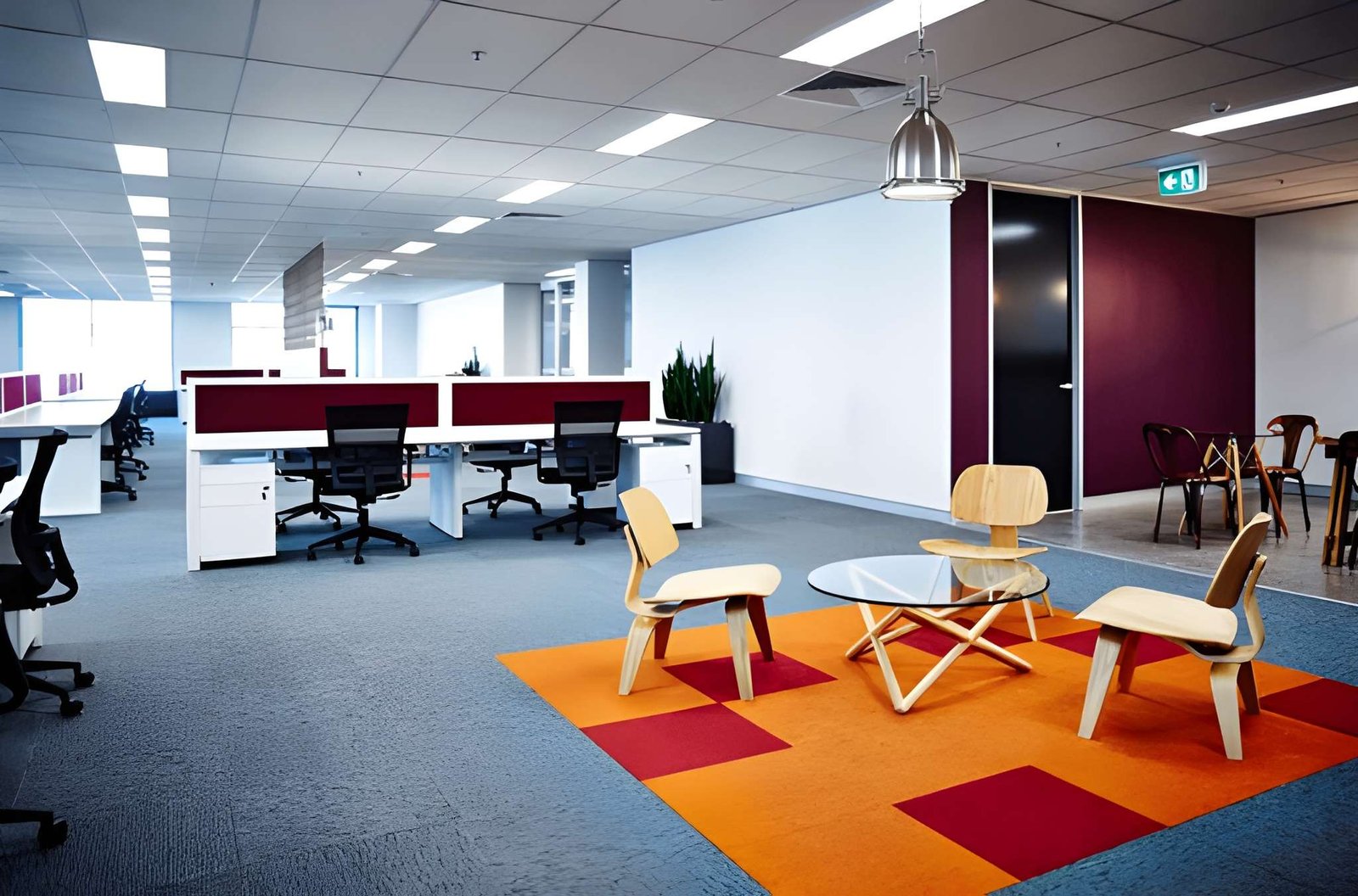
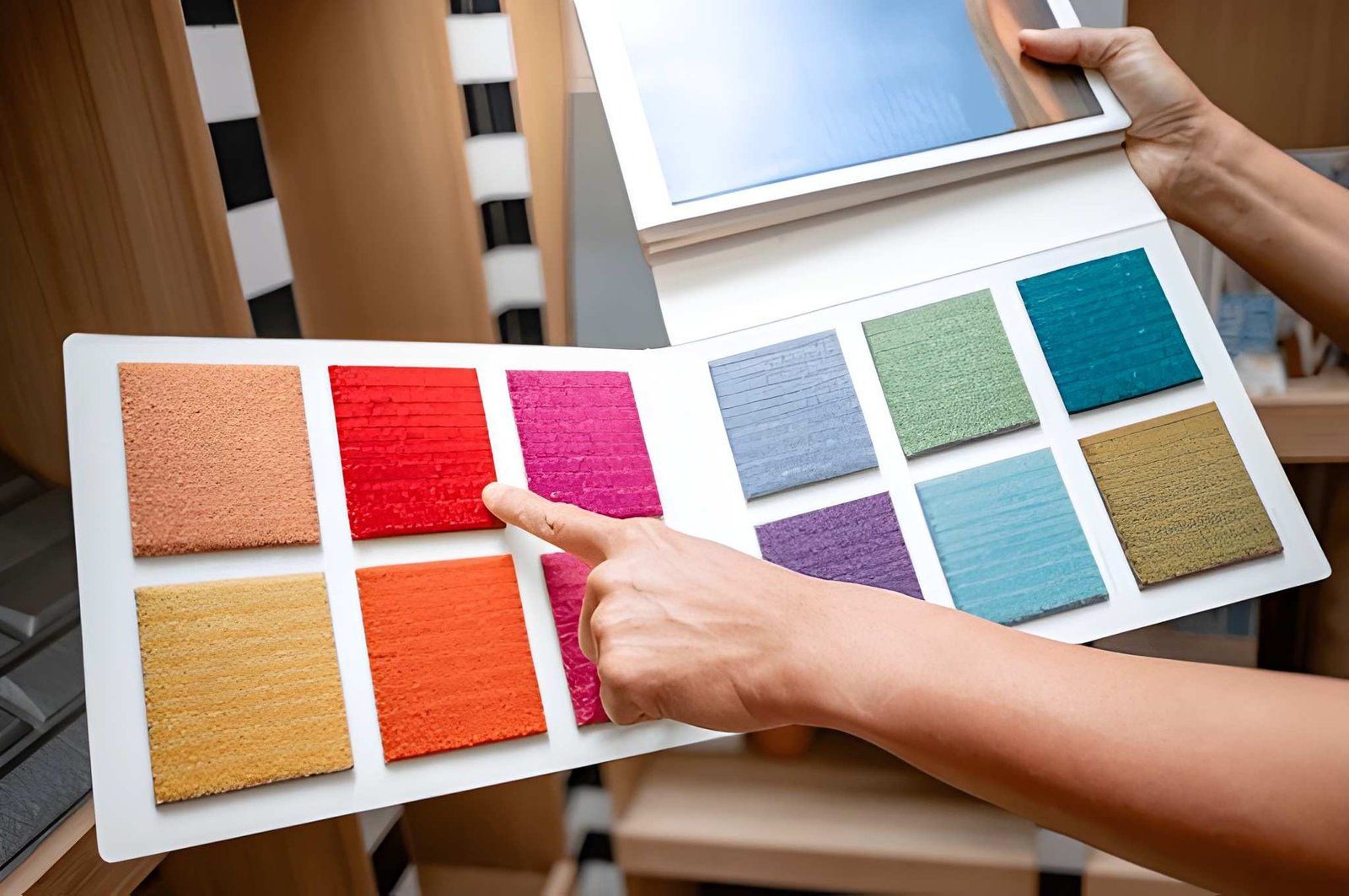
    Office carpet colours play an important role in shaping the appearance, comfort, and functionality of modern workplaces. In today’s corporate environments, carpet is more than just flooring — it helps define the atmosphere of the office while supporting branding, employee comfort, and long-term practicality.

    The right commercial carpet colours can make an office feel more professional, welcoming, and visually organized. From neutral carpet tiles in open-plan offices to darker tones in high-traffic corporate areas, colour selection has become an important part of modern office flooring design.

    Why Carpet Colour Is Important in Office Design

    Carpet colour has a major influence on how a workplace looks and feels. Since flooring covers a large portion of the office interior, choosing suitable office carpet colours can improve aesthetics, functionality, and the overall workplace experience.

    1. First Impressions and Professional Appearance

    Office flooring contributes heavily to first impressions.

    Clients and visitors often notice the overall atmosphere of a workspace before anything else, and carpet colour helps shape that perception.

    Neutral commercial carpet colours such as grey, charcoal, and beige remain popular because they create a clean, professional, and timeless appearance suitable for modern corporate interiors.

    2. Employee Comfort and Workplace Atmosphere

    The colour of a carpet can influence how comfortable employees feel throughout the day.

    Soft and balanced tones help create a calm working environment that supports concentration and productivity. In contrast, overly bright or intense colours may become visually tiring in long-term office settings.

    Many businesses prefer modern office carpet colours that feel professional without making the space appear cold or overly formal.

    3. Space Perception and Lighting

    Carpet colour can visually affect the size and brightness of a workspace.

    Lighter office carpet colours help smaller offices feel more open and spacious, especially when combined with natural lighting. Darker tones create a more premium and structured appearance, making them suitable for larger corporate offices and executive spaces.

    This balance is important in workplace interior design where both functionality and aesthetics matter.

    4. Maintenance and Long-Term Practicality

    Practicality is one of the most important factors in commercial office flooring.

    Darker carpet tiles for office environments are often chosen because they help conceal dirt, stains, and daily wear. Patterned carpet designs are also effective for high-traffic office areas such as corridors, reception spaces, and collaborative work zones.

    Choosing practical office carpet colour ideas can help businesses maintain a cleaner and more polished appearance over time.


    Related Articles:


    5. Supporting Brand Identity

    Many companies choose carpet colours that align with their branding and office concept.

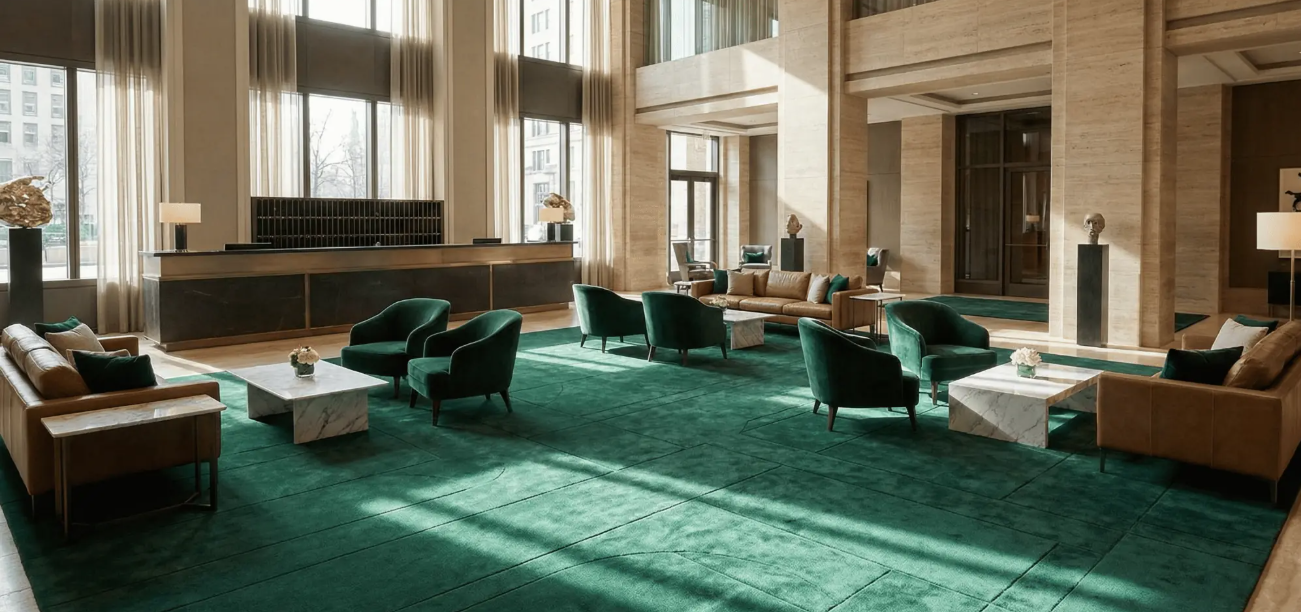
    Blue tones are commonly associated with professionalism and trust, while green and earthy tones are often used in sustainability-focused office interiors. Neutral colours remain versatile because they work well with different furniture styles, wall finishes, and workplace layouts.

    Consistent office flooring design helps create a stronger and more cohesive corporate identity.

    Carpet Colour Psychology in the Workplace

    Colour psychology plays an important role in modern office design because colours can influence mood, focus, and workplace perception. Choosing suitable office carpet colours helps businesses create environments that support productivity, professionalism, and employee wellbeing.

    Many modern corporate spaces combine neutral flooring with subtle accent colours to create a balanced and functional workplace atmosphere.

    Carpet ColourPsychological EffectCommon Office Application
    GreyProfessional, balanced, modernOpen offices, workstations, meeting rooms
    BlueCalm, focused, trustworthyCorporate offices, executive rooms
    Beige & Neutral TonesWarm, welcoming, timelessReception areas, coworking spaces
    Charcoal & BlackPremium, sophisticated, structuredHigh-traffic areas, boardrooms
    Green & Earth TonesRelaxing, natural, balancedCreative offices, breakout spaces
    Soft Brown TonesComfortable, stable, groundedLounge areas, hospitality-inspired offices

    Neutral office carpet colours continue to dominate commercial interiors because they offer flexibility and long-term visual appeal. However, accent colours are increasingly used to define collaboration zones and create more engaging workplace environments.

    Office Carpet Colour Trends in Modern Corporate Interiors (2026)

    Modern office carpet trends in 2026 focus on creating workspaces that feel professional, comfortable, and visually balanced. Businesses are increasingly selecting carpet colours that combine practicality with contemporary workplace aesthetics.

    Many of these trends are also influenced by sustainability-focused and employee-centric office design concepts.

    1. Muted Earthy Tones

    Earth-inspired colours such as olive green, taupe, clay, and warm brown are becoming more common in corporate office carpet design.

    These tones create a calmer and more natural atmosphere while supporting biophilic workplace concepts that emphasize wellbeing and connection to nature.

    2. Charcoal and Dark Grey Carpet Tiles

    Dark grey and charcoal remain among the most popular office carpet colours for modern workplaces.

    These colours provide a sleek and professional appearance while helping conceal dirt and heavy foot traffic. Charcoal carpet tiles are especially practical for large commercial offices and busy workplace environments.

    3. Textured Neutral Carpet Designs

    Neutral commercial carpet colours are evolving beyond plain finishes.

    Modern carpet tiles for office spaces now feature subtle textures and tonal variations that add visual depth without overwhelming the interior. This trend works particularly well in open-plan offices and collaborative workspaces.

    4. Accent Colours for Office Zoning

    Many modern offices use different carpet colours to visually separate functional areas.

    Muted blue, green, and terracotta tones are commonly used in breakout zones, collaborative spaces, and informal meeting areas. This approach improves workplace organization while adding more character to the office interior.

    5. Sustainable-Inspired Colour Palettes

    Natural-inspired office flooring design continues growing in popularity.

    Soft greens, stone greys, sandy beige, and organic neutral tones help create office environments that feel more welcoming and comfortable. These colours also pair well with minimalist corporate interior concepts and sustainable workplace design trends.

    Choosing the Right Office Carpet Colours for Long-Term Workplace Success

    Choosing the right office carpet colours can significantly improve the appearance, comfort, and functionality of a corporate workspace. From creating a professional first impression to supporting productivity and simplifying maintenance, carpet colour plays an important role in modern office flooring design.

    At United Carpet, we provide high-quality commercial carpet solutions for offices, corporate buildings, and modern workplaces. Whether you are looking for durable carpet tiles, contemporary office flooring, or professional office carpet installation services, our team can help you find the right solution for your project.

    Contact the United Carpet team today or explore our latest commercial carpet collections to discover suitable flooring options for your workspace.

  • What to Know Before Specifying Hotel Corridor Carpet

    What to Know Before Specifying Hotel Corridor Carpet

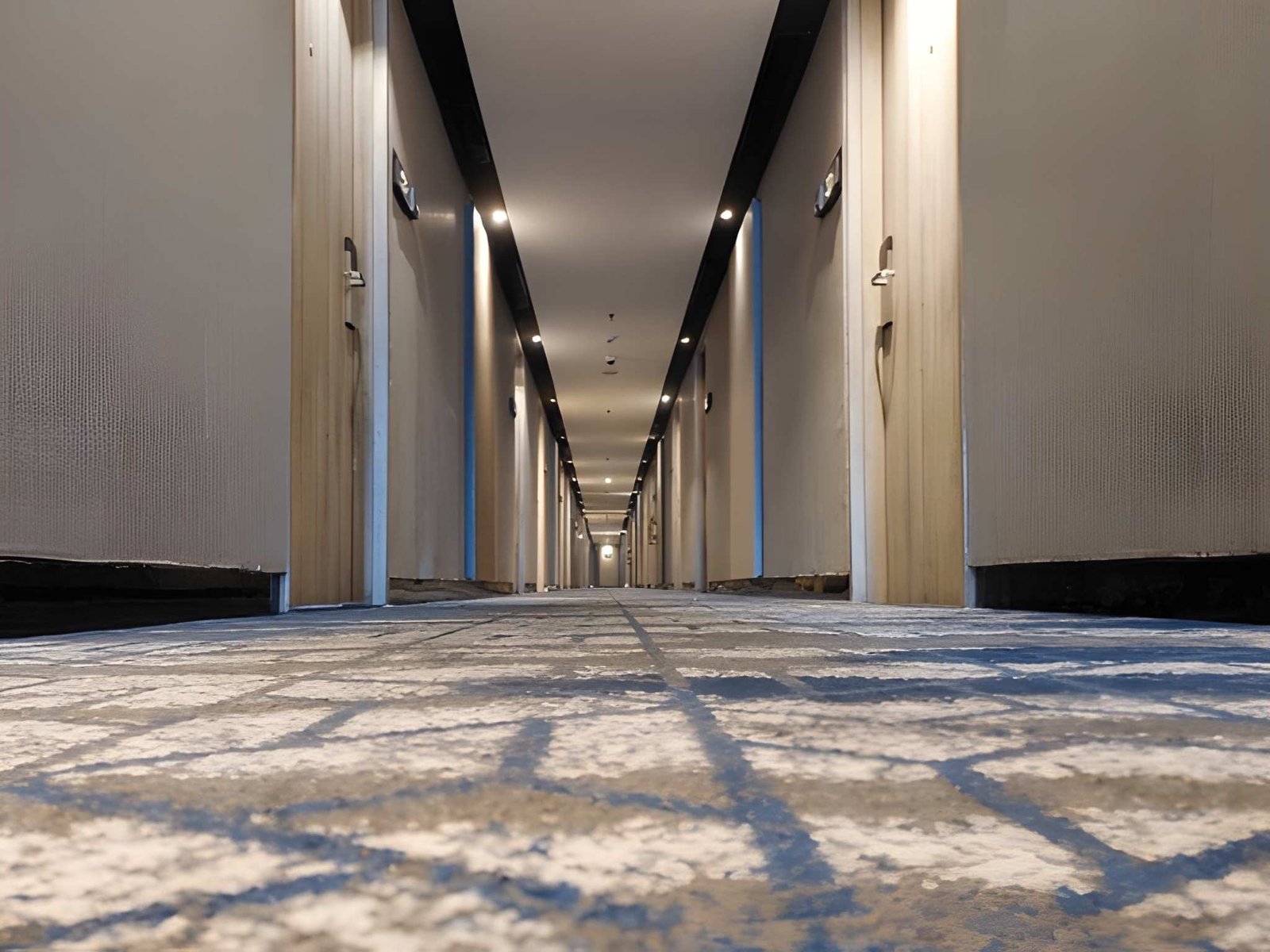
    Hotel corridor carpet plays an important role in both guest experience and operational performance.

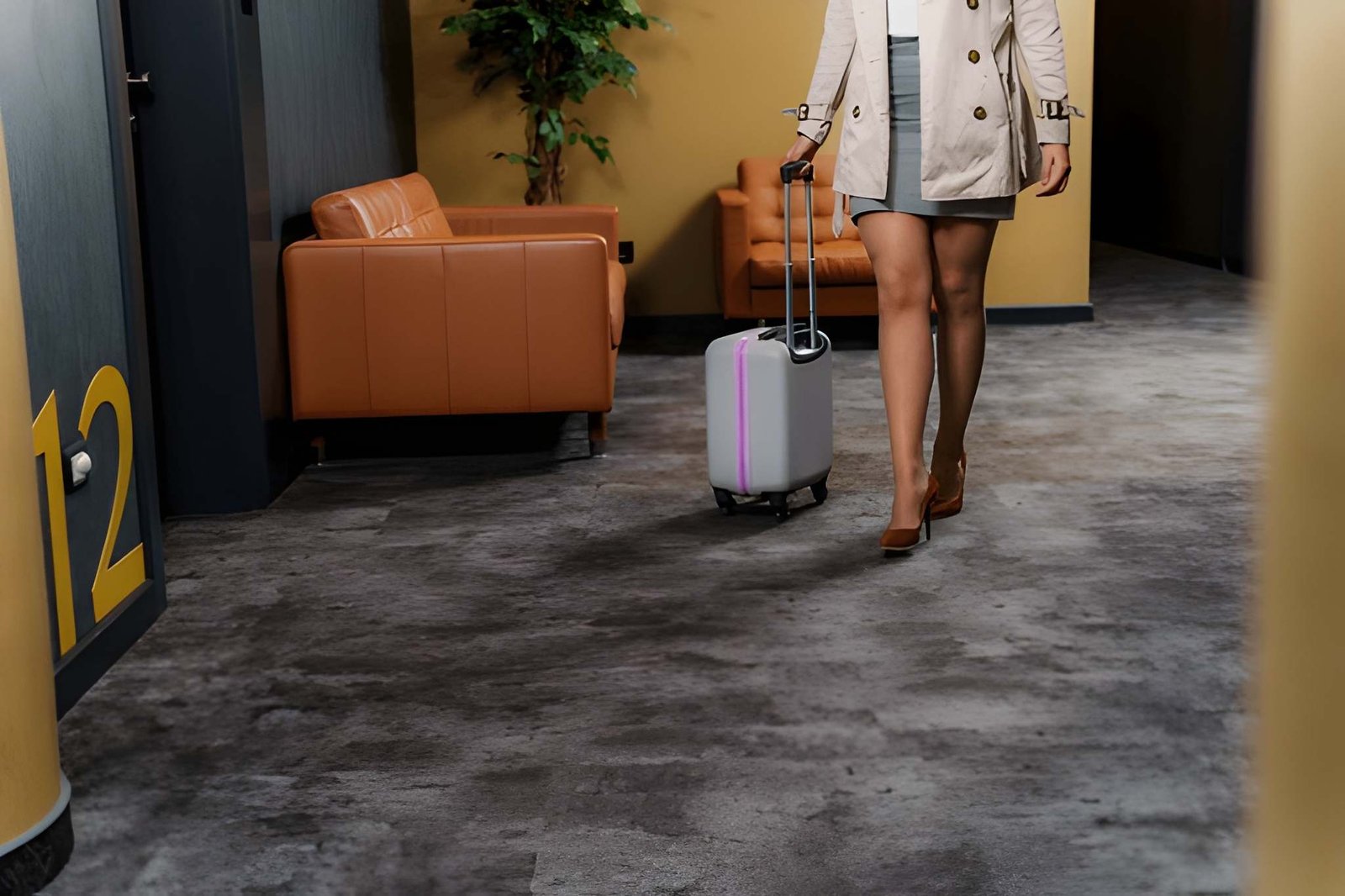
    Unlike guest room flooring, hotel corridors are exposed to continuous foot traffic, rolling luggage, housekeeping carts, and daily cleaning activities. Because of this, choosing the wrong carpet can lead to faster wear, visible stains, and higher maintenance costs over time.

    Beyond durability, hotel corridors carpet also contributes to acoustics, safety, and interior aesthetics.

    A well-specified hospitality corridor carpet helps reduce noise while creating a welcoming atmosphere that matches the hotel’s branding. Whether for luxury hotels, boutique properties, or business accommodations, selecting the right carpet requires balancing performance, maintenance, and design from the beginning.

    Key Factors to Consider Before Choosing Hotel Corridor Carpet

    Choosing carpet for hotel corridors involves more than selecting colors or patterns. Corridor areas experience some of the heaviest traffic in hospitality environments, so the carpet must maintain its appearance while performing well for years.

    Understanding the technical and practical considerations can help hotels avoid costly replacement and maintenance issues.

    1. Durability and Construction Type

    Durability should always be one of the first considerations when specifying hotel corridor carpet.

    Corridors handle constant movement from guests, luggage trolleys, housekeeping equipment, and service carts throughout the day. Because of this, low-quality carpet can quickly show crushing, fading, or visible traffic lanes.

    Several construction factors directly affect long-term performance:

    • High pile density helps the carpet maintain its shape under heavy traffic
    • Strong backing systems improve dimensional stability
    • Solution-dyed nylon offers better stain resistance and color retention
    • Dense loop piles are often more durable for hospitality corridor carpet applications

    Luxury hotels commonly choose broadloom carpet because it creates a seamless and elegant appearance.

    Meanwhile, carpet tiles are often preferred for hotels that prioritize faster maintenance and easier replacement.

    2. Pattern Selection for Long Corridors

    Pattern selection has a major impact on both aesthetics and practicality.

    Long hotel hallways can easily feel repetitive if the carpet design is too plain or visually flat. The right pattern helps create movement while supporting the hotel’s interior identity.

    Patterned hotel corridors carpet is also highly practical because it helps disguise dirt, stains, and traffic marks between cleaning cycles.

    This is one reason many hospitality designers avoid overly plain carpet designs in high-traffic areas.

    Popular choices for hotel hallway carpet include:

    • Organic or biophilic-inspired textures
    • Subtle geometric patterns
    • Layered tonal designs
    • Custom brand-inspired motifs

    These styles create visual interest without overwhelming the corridor space.

    3. Slip Resistance and Guest Safety

    Guest safety should never be overlooked when choosing carpet for hotel corridors.

    Hallways connect multiple guest areas and may occasionally experience moisture from outdoor access points or housekeeping activities. Carpet with proper slip resistance can help reduce accident risks while improving overall comfort.

    Installation quality also matters just as much as the carpet itself.

    Uneven surfaces, lifting edges, or poorly installed transitions can create tripping hazards in busy hospitality environments.

    Hotels should pay close attention to:

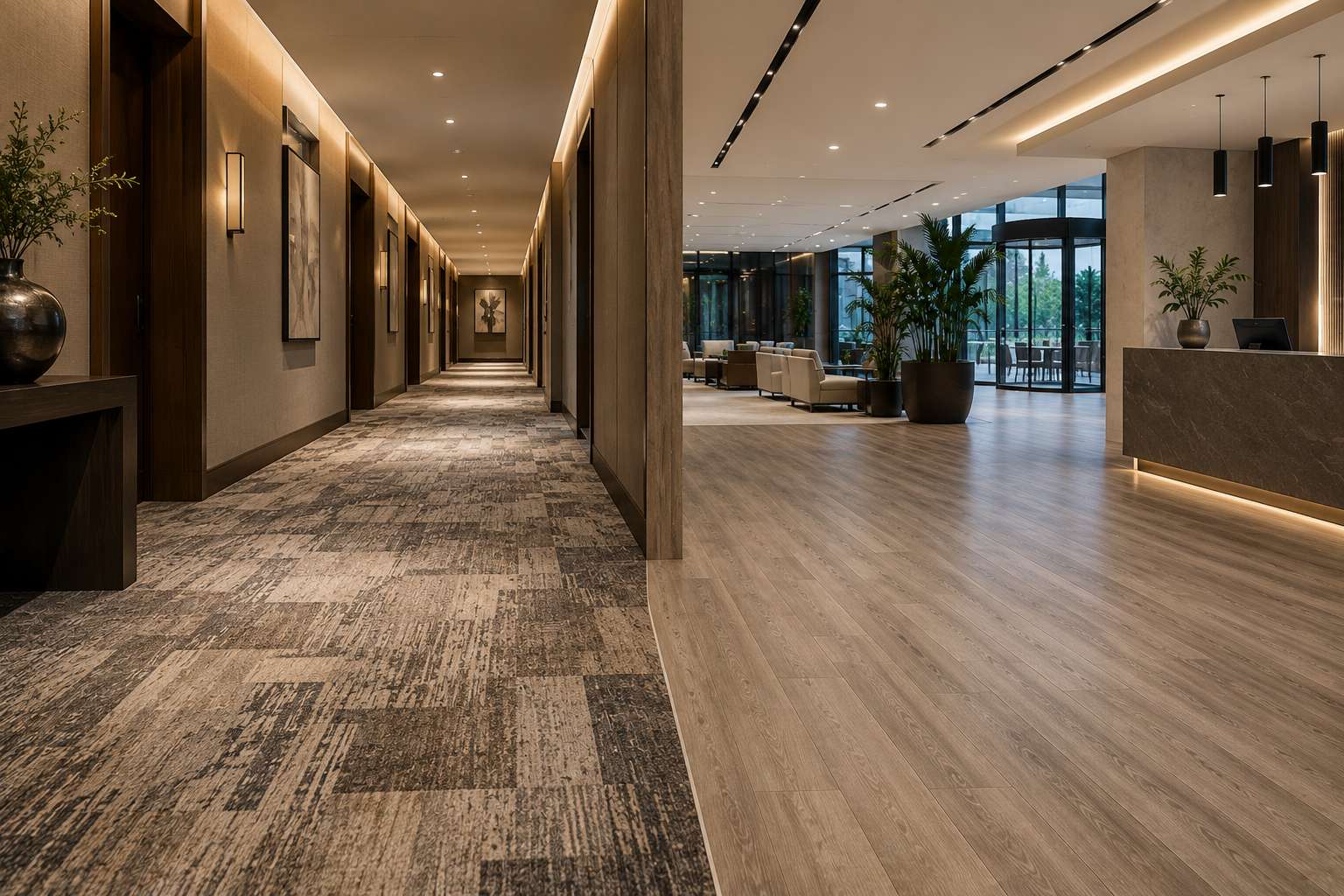
    • Carpet-to-floor transition areas
    • Adhesive and backing performance
    • Corridor corners and elevator access zones
    • Wheel traffic from housekeeping carts and luggage

    Small installation details often make a major difference in long-term safety performance.

    4. Maintenance Requirements

    Hotel corridor carpet requires frequent cleaning to maintain a professional appearance.

    Carpets that easily trap dirt or show stains quickly can increase operational costs and shorten replacement cycles.

    Materials with stain-resistant properties are generally easier to maintain in hospitality environments.

    Carpet tiles can offer practical advantages because damaged sections can be replaced individually without changing the entire floor area.

    However, many premium hotels still prefer broadloom carpet for its luxurious and seamless finish despite the more complex replacement process.

    In luxury hospitality projects, appearance and guest perception often outweigh maintenance convenience.


    Related Articles:


    5. Fire Safety and Hospitality Standards

    Hotel corridor carpets should comply with local fire safety regulations and hospitality standards.

    Since corridors function as key circulation routes and emergency pathways, carpets must meet required fire performance ratings.

    Besides fire resistance, some hospitality projects also evaluate:

    • Smoke emission performance
    • Indoor air quality certifications
    • Low-VOC materials
    • Compliance with hospitality building standards

    Choosing compliant hotel corridor carpet helps support guest safety while ensuring the property meets long-term operational requirements.

    2026 Design Trends in Modern Hotel Corridor Carpet

    Modern hotel corridor carpet design now focuses on combining aesthetics with performance and sustainability.

    Hotels are increasingly selecting carpets that not only look attractive but also improve maintenance efficiency and guest comfort. As hospitality design evolves, corridor carpets have become part of the hotel’s overall branding and interior storytelling.

    1. Biophilic and Organic Patterns

    Nature-inspired carpet designs continue to grow in popularity across hospitality projects.

    Organic textures, flowing patterns, and stone-inspired visuals help create a calmer and more welcoming atmosphere within hotel corridors.

    These patterns also work well in long hallways because they soften the appearance of narrow spaces while helping disguise traffic wear.

    Many hotels combine textured carpet tiles or patterned broadloom carpet to achieve both durability and visual warmth.

    2. Neutral Luxury Tones

    Neutral color palettes remain one of the most common choices for hotel corridor carpet.

    Shades like charcoal, taupe, beige, and warm grey create a timeless appearance that suits many hospitality concepts.

    Neutral tones are also practical because they maintain a cleaner appearance between maintenance cycles.

    Luxury hotels often pair these colors with woven carpet or premium broadloom installations to create a more refined and sophisticated hallway environment.

    3. Custom Branding Through Carpet Design

    Many hotels now use hospitality corridor carpet as part of their branding strategy.

    Custom patterns can reflect architectural themes, local cultural influences, or signature hotel identities.

    Boutique hotels often invest in custom-designed broadloom carpet to create a unique visual experience throughout the property.

    At the same time, modular carpet tiles allow designers to create flexible layouts while maintaining easier maintenance access.

    4. Sustainability and Recycled Materials

    Sustainability has become increasingly important in hospitality flooring projects.

    Many hotels now prioritize carpets made from recycled materials or products manufactured through environmentally responsible processes.

    Carpet tiles are commonly used in sustainable hotel projects because they reduce waste during installation and replacement.

    However, sustainable broadloom options are also becoming more widely available for hotels seeking both environmental responsibility and premium aesthetics.

    How to Choose the Right Hotel Corridor Carpet Supplier

    Choosing the right supplier is just as important as selecting the carpet itself.

    Hospitality projects require suppliers who understand hotel operational needs, design expectations, and long-term maintenance requirements. A reliable supplier can help ensure better flooring performance while minimizing future issues.

    1. Hospitality Project Experience

    Suppliers with hospitality experience usually have a better understanding of hotel traffic conditions, acoustic needs, and maintenance expectations.

    This allows them to recommend suitable hotel corridor carpet solutions based on the property type and operational requirements.

    Experienced suppliers are also more familiar with the installation standards commonly required in hotels, resorts, and serviced apartments.

    2. Customization Capability

    Different hotels require different design approaches.

    Some properties may need custom patterns, brand-specific colors, or unique layouts that match their interior concept.

    Suppliers with strong customization capabilities can provide more flexibility without sacrificing carpet durability or hospitality performance standards.

    This is especially important for boutique hotels and premium hospitality projects.

    3. Installation Support

    Proper installation greatly affects carpet appearance and long-term durability.

    Even high-quality carpet can experience issues if installation is poorly executed or if the subfloor preparation is inadequate.

    Reliable carpet suppliers usually provide technical guidance and experienced installation support for hospitality projects.

    This helps reduce the risk of uneven surfaces, visible seams, or premature wear.

    4. Maintenance Guidance and Warranty

    Long-term maintenance support is another important factor when evaluating suppliers.

    Hotels benefit from suppliers who can provide cleaning recommendations and maintenance guidance tailored to hospitality environments.

    Warranty coverage should also be reviewed carefully.

    Strong warranty support often reflects greater confidence in the durability and performance of the hotel hallway carpet products being supplied.

    Finding the Right Carpet Solution for Hotel Corridors

    Choosing the right hotel corridor carpet is essential for creating a comfortable, durable, and visually appealing hospitality environment.

    From durability and safety to maintenance and design trends, every specification decision can impact long-term operational performance and guest experience.

    As an experienced commercial carpet supplier, United Carpet has supported various hospitality and hotel projects with high-quality carpet solutions designed for demanding environments.

    Whether you need broadloom carpet for luxury hotel corridors or practical carpet tiles for high-traffic hospitality spaces, the United Carpet team can help you find the right solution for your project .

    Contact the United Carpet team today to discuss your hotel corridor carpet requirements and explore suitable carpet solutions for your hospitality project.

  • How to Choose Commercial Carpet for High Traffic Areas

    How to Choose Commercial Carpet for High Traffic Areas

    Choosing the right carpet for high traffic areas is a critical decision in commercial environments. From constant foot traffic to rolling loads, dirt, and moisture, flooring is exposed to continuous stress that goes far beyond aesthetics.

    When the wrong carpet is specified, issues such as flattened pile, visible wear paths, and increased maintenance quickly appear—leading to higher costs and operational disruption. This is why performance, durability, and long-term value must be carefully considered.

    This article outlines how to approach high traffic areas strategically, covering the right carpet types—including Axminster—and the role of proper maintenance in ensuring lasting performance.

    What Are High Traffic Areas?

    High traffic areas are defined by continuous, repetitive movement throughout the day. These spaces experience concentrated footfall along predictable routes, often combined with equipment such as luggage trolleys, office chairs, or service carts.

    High traffic zones are commonly found in hotel lobbies and corridors, office entrances and reception areas, retail stores, airports, hospitals, and educational buildings. In many of these environments, carpet performance directly affects first impressions, safety, and operational efficiency.

    Standard carpets are not engineered to withstand sustained commercial use. High traffic areas demand carpets that can resist crushing, maintain structural stability, and tolerate frequent cleaning. Without these characteristics, even well-designed interiors can deteriorate quickly.

    Key Characteristics of Carpet for High Traffic Areas

    Selecting the right carpet for high traffic areas starts with understanding the key characteristics that determine long-term performance

    1. Durability Beyond Appearance

    Durability in high traffic carpet is determined by a combination of fiber resilience, yarn twist, pile density, and construction method. Dense, tightly constructed carpets distribute pressure more evenly, reducing permanent deformation and visible wear.

    2. Soil Management and Stain Resistance

    In busy environments, dirt is unavoidable. Effective high traffic carpets focus not only on stain resistance but also on soil concealment, helping spaces maintain a clean appearance between cleaning cycles. This is especially important in entrances and corridors where dirt is continuously tracked in.

    3. Safety and Compliance

    Carpets in commercial spaces must support safe movement, comply with fire regulations, and contribute positively to indoor air quality. These considerations are particularly critical in hospitality, healthcare, and public buildings.

    Best Types of Carpet for High Traffic Areas

    Choosing the right carpet for high traffic areas depends on understanding how different carpet types perform under continuous use.

    Some options prioritize durability and structure, while others focus on flexibility and maintenance efficiency. The comparison below highlights the most suitable carpet types for demanding commercial environments.

    Carpet TypeKey StrengthsBest ApplicationsConsiderations
    Carpet Tiles (Modular Carpet)Easy replacement of damaged areas; flexible and cost-efficient maintenance; suitable for phased installationsOffices, airports, retail spacesMay lack the seamless look of broadloom or woven carpets
    Axminster CarpetWoven construction for maximum durability; excellent resistance to crushing and wear; long-lasting pattern clarityHotel corridors, ballrooms, convention centers, premium lobbiesHigher upfront cost, but longer lifespan
    Solution-Dyed Nylon CarpetExcellent resilience and recovery; high stain and fade resistance; performs well under heavy trafficOffices, schools, retail, transport hubsPerformance depends on construction (e.g. tufted vs woven)
    Loop Pile / Low-Profile CarpetStrong resistance to crushing; maintains uniform appearance; minimizes visible wear patternsCorridors, workspaces, circulation areasLess plush feel compared to cut pile carpets

    Related Articles:


    How to Choose the Right Carpet for High Traffic Areas

    Choosing the right carpet for high traffic areas requires more than selecting a durable material. It involves aligning carpet type, construction, and maintenance strategy with how a space is actually used.

    1. Evaluate Traffic Patterns and Usage Needs

    Start by identifying how the space is used on a daily basis. Areas such as corridors, entrances, and public zones experience different types of stress compared to meeting rooms or private offices. Foot traffic volume, direction, and the presence of rolling loads all influence the type of carpet that will perform best.

    2. Match Carpet Construction to Performance Requirements

    Different carpet constructions offer different levels of durability and appearance retention. For example, woven carpets like Axminster provide long-term structural stability, while modular carpet tiles offer flexibility in maintenance. Selecting the right construction helps ensure the carpet performs consistently under pressure.

    3. Plan for Maintenance from the Start

    Even the most durable carpet will underperform without proper care. Regular vacuuming, periodic deep cleaning, and the use of entry matting systems all play a role in extending carpet lifespan. A well-planned maintenance strategy protects both performance and appearance.

    4. Work with Experienced Carpet and Flooring Specialists

    For high traffic environments, selecting the right carpet often requires technical insight beyond basic product knowledge. Working with experienced carpet and flooring specialists ensures that recommendations are based on real usage conditions, performance expectations, and long-term value.

    Providers like United Carpet can support this process by offering tailored solutions, including durable options such as Axminster, along with guidance on specification and lifecycle performance.

    Long-Term Performance with United Carpet Expertise

    Choosing the right carpet for high traffic areas is ultimately about long-term thinking. Construction quality, correct specification, and proper maintenance all play equally important roles in how a carpet performs over time.

    In demanding environments, woven solutions such as Axminster continue to set the benchmark for durability and design retention, while modular and tufted systems offer flexibility when correctly applied. Manufacturers that are involved from specification through to lifecycle planning add real value to commercial projects.

    As a manufacturer of Axminster carpet, United Carpet supports high traffic spaces with solutions designed not only to look good at installation, but to perform consistently over years of use—backed by an understanding of design, construction, and long-term maintenance needs.

    Contact United Carpet today to explore tailored carpet solutions—including high-performance options like Axminster—designed to meet the demands of your project.